From the West Coast of the United States, author Carey McWilliams studied the development of agriculture in California and argued fascist methods of control made industrial farming possible.
In Factories in the Field, McWilliams referred to California as a “colonial empire” where large landholdings were established by the 1870s through careless state land policies, corrupt officials, fraud, and extreme violence.[3] In turn, the concentration of massive farms in the hands of the few required a cheap, disposable labor force composed of Chinese, Japanese, Indian, Filipino, and Mexican workers. By 1935, the Associated Farmers of California, Inc. had created a widespread card index file system identifying radicals, distributed anti-labor bulletins/literature, campaigned for rural emergency-disaster and anti-picketing ordinances to break strikes, and convinced local sheriffs to deputize vigilante mobs to permanently curb farm labor unionization. Together, these methods constituted what McWilliams called “Farm Fascism.” Farm Fascism would come to Los Angeles in April 1936 when 1,500 policemen, deputy sheriffs, and guards teargassed and beat up celery farm strikers in Venice.[4] Factories in the Field demonstrates that racism is a moving concept (racialization to lower labor costs). It is very likely that six politically engaged Black men in South Central LA would have learned of fascism on California farms by 1936. As Cedric J. Robinson claims, “There’s no possibility of really telling a Black story without telling other peoples’ stories.”[5]
At the same time, the American story has also proven to be fertile ground for the growth of Black antifascists. World War I (1914-1918) required recruiting Black workers to industrial centers where they would become union organizers or soldiers who returned committed to the struggle for Black rights. The rise in militancy would make Black nationalism compelling and lead to the growth of organizations like the Universal Negro Improvement Association (UNIA) and the African Blood Brotherhood (ABB). In 1929, the Great Depression would result in a high Black unemployment rate that led folks to ride the rails in search of work and encounter hoboes who talked about direct action and solidarity, principles associated with International Workers of the World (IWW) membership. Others joined the Communist Party USA (CPUSA) or CPUSA-affiliated organizations like unemployment councils to advocate for downtrodden workers, prevent housing evictions, and fight for lower food prices.
One of those people was Alphaeus Prowell, whose antifascist politics and journey to the Spanish Civil War (1936–1939) followed from his travels across the United States and a commitment to education. Although little is known about his childhood, census records indicate he was born in Missouri around 1905, the son of a Baptist preacher. Reverend John W. Prowell’s profession took his family to Kansas, Illinois, and Colorado. In an undated letter from Albacete, Spain, Alphaeus Prowell discussed the impact of racism when he described Dallas, Texas, to be a place where “[t]here are no Negro Cops, mail carriers and only a few Negro school teachers in inferior Jim Crow schools.”[6] By September 1923, he enrolled at Oxnard Union High School as a sophomore, ran track at the University of Southern California in 1926, and continued his studies at California Christian College (Chapman University today) in 1930. In an interview, Frank Alexander recalled his old roommates by stating, “all I could do was simply listen to them with awe because they knew so much about history, they knew so much about, you know, everything that was going on day after day.”[7] For Prowell, antifascism was produced from a mixture of personal experience with racial injustice in the United States and a formal education that would allow him to conclude: “War alone will break International Capitalism.”[8]
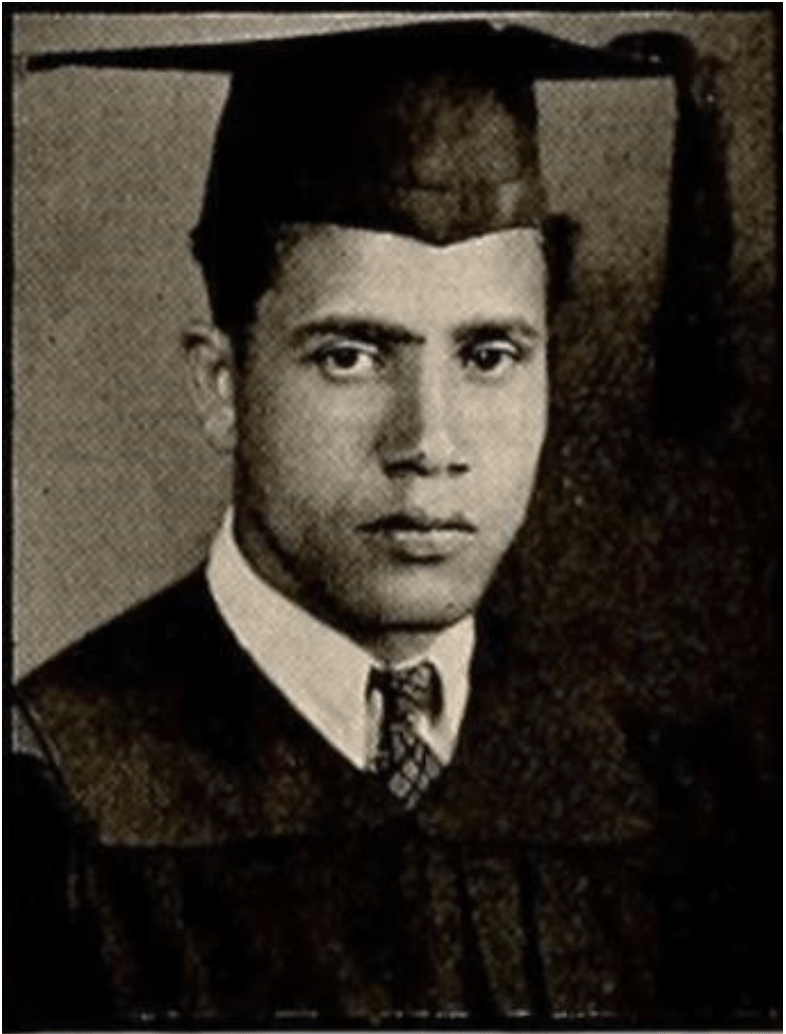
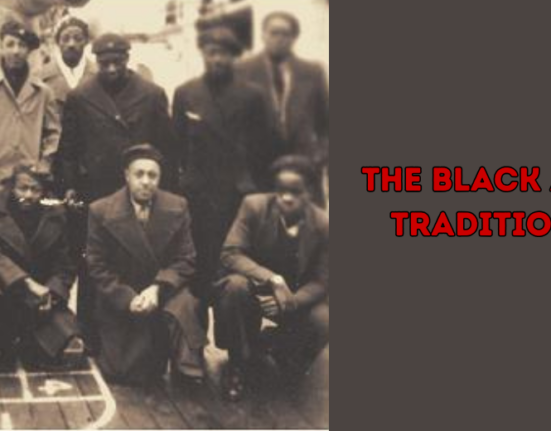
On August 14, 1937, Alphaeus Prowell sailed to Europe and war aboard the SS Champlain. He likely would have landed in France and crossed the Pyrenees mountains by foot before arriving at Albacete, Spain, for basic training. There, he became part of the 35,000 volunteers who joined the International Brigades, which included 2,800 Americans and nearly 80 Black Americans. As part of the interracial military force in solidarity with Spaniards fighting fascism, Prowell served in the observatory department (tracking enemy movements) under the command of a Black man from New York City named Walter Garland. On the battlefield alongside other antifascists from around the world, Prowell experienced a new world where he felt embraced by others and honed a commitment to interracial solidarity as the most effective method to combat fascism. In a letter dated September 17, 1937, he wrote, “I too have now decided to devote the remainder of my life to the cause of world revolution. I have learned much, and I have so much more to learn. I really believe that Spain is the turning point of my life. I am really happy.”[9] He died in April 1938 as the Lincoln Battalion retreated across the Ebro river in the face of General Francisco Franco’s overwhelming military force.
For student protestors at UCLA, the violence they faced to engage in freedom of speech and help end the war in Gaza has become a turning point in their lives. Their deep knowledge of fascism was beaten into them by vigilante mobs and militarized police on-campus. Like Black American volunteers who fought fascism during the Spanish Civil War, contemporary protestors know that fascism is rooted in a way of being in the world and their freedom bound to that of people on the other side of the planet. In light of California lawmakers making $25 million in public education funding to the UC system contingent upon a new framework to redefine and punish free speech, students have also learned about the ideological core shared by fascism and liberalism. For those excluded from the promise of human rights, liberal politicians in California punishing freedom of speech are complicit with MAGA-types suppressing academic freedom in Florida. Similarly, the lawsuit filed by the Department of Justice on May 26, 2026, against the University of California for violating Title VI of the Civil Rights Act of 1964 is ironic. Despite doing everything possible to silence antiwar protestors, the UC system was sued by an administration who cares less about racial and national discrimination in higher education than rescinding grant payments and trying to destroy access to higher education for everyone. Nonetheless, students will continue to engage in struggle and draw inspiration from their political ancestors, especially Black antifascists from South Central LA.
[1] Robin D. G. Kelley, Race Rebels: Culture, Politics, and the Black Working Class (1994; repr., New York: The Free Press, 1996), 145.
[2] Cedric J. Robinson, On Racial Capitalism, Black Internationalism, and the Cultures of Resistance, ed. H. L. T. Quan (London: Pluto Press, 2019), 152.
[3] Carey McWilliams, Factories in the Field: The Story of Migratory Farm Labor in California (1939; repr., Berkeley, CA: University of California Press, 2000), 21.
[4] Ibid., 244.
[5] Gaye Theresa Johnson and Alex Lubin, eds., Futures of Black Radicalism (London: Verso, 2017), 7.
[6] Dawn Rolland, Alphaeus Danfourth Prowell: Letters from an American volunteer in the Spanish Civil War (self-pub., Kindle Edition, 2015).
[7] Frank Edward Alexander Interview, ALBA 216, Box 1, Folder 39, Tamiment Library/Robert F. Wagner Labor Archives, New York University.
[8] Dawn Rolland, Alphaeus Danfourth Prowell: An Unordinary Life (self-pub., Kindle Edition, 2015).
[9] Ibid.