This blog is the fifth in our ongoing series on the “Black Antifascist Tradition.”
Since the emergence of fascism in Italy and Germany, Black activists such as William Patterson and W.E.B. Du Bois had considered racism and fascism as two sides of the same coin. Influenced by Patterson and Du Bois, activists who emerged during the Black Freedom Struggle considered the infiltration of the Ku Klux Klan in law enforcement agencies, the assassination of Black leaders, jailing and beating of nonviolent demonstrators, policies such as forced sterilization, and the military response to urban rebellions between 1965 -1968 as a clear indication of the fascist nature of the US government.[1] While European scholars of fascism often deny the Ku Klux Klan, other US-based white supremacist organizations, and racist US government policies are “fascist,” Black activist-intellectuals between the 1960s and 1980s countered such denial through their speeches, editorials, and during interviews.
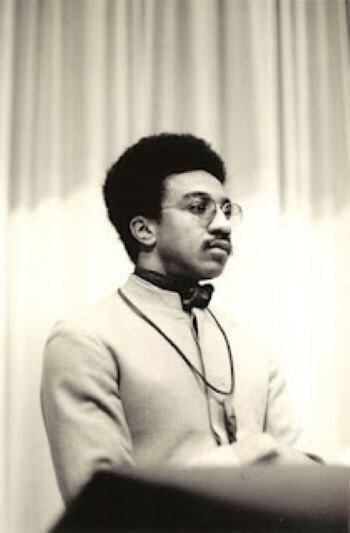
But was the United States between the 1960s and the 1980s in the incipient phase of fascism, as Angela Davis argued, or a full-blown fascist state? Were Black Power activists trying to prevent the United States government from becoming a fascist state, or had the US government already become a fascist state? Moreover, did Black activists who called the US government a fascist state do this as political rhetoric designed to delegitimize government policies and policing tactics they deemed racist? Or did they intend on proving to people of color and progressive whites that the United States was already a fascist government engaged in a genocide?
When Black activist H. Rap Brown reflected what he had learned about US history in his 1969 autobiography, it was clear that US progress depended on total genocide against the “American Indian,” at home and crushing people of color abroad. The US, he claimed, “dropped the bomb on Japan and not on Germany, not because they didn’t have the bomb, but because the Japanese are yellow.” As for US post-war efforts to curtail communism, he asserted, “America has never moved to stop communist aggression in white countries by utilizing anti-personnel bombs and napalm; in Poland, Hungary, Czechoslovakia, she uses RADIO FREE EUROPE; never weapons of destruction.” At home, H. Rap Brown built on Detroit-based labor activist James Boggs’ argument that automation had made African Americans irrelevant to the labor supply needed to fuel the American economy. For this reason, Brown believed the US “legitimatizes her program of genocide, by implanting into the minds of whites, and negroes, the idea that Blacks don’t do anything but “riot and get on welfare.” Yet, he and other Black activists “put America on notice: IF WHITE FOLKS WANT TO PLAY NAZIS, BLACK FOLKS AIN’T GOING TO PLAY JEWS.” Brown’s rhetoric provoked liberal whites and moderate Black Americans who lived in urban North, Midwest, and West to see the connection between the fascist threat within federal and state repression and the erosion of democracy and civil liberties.[2]
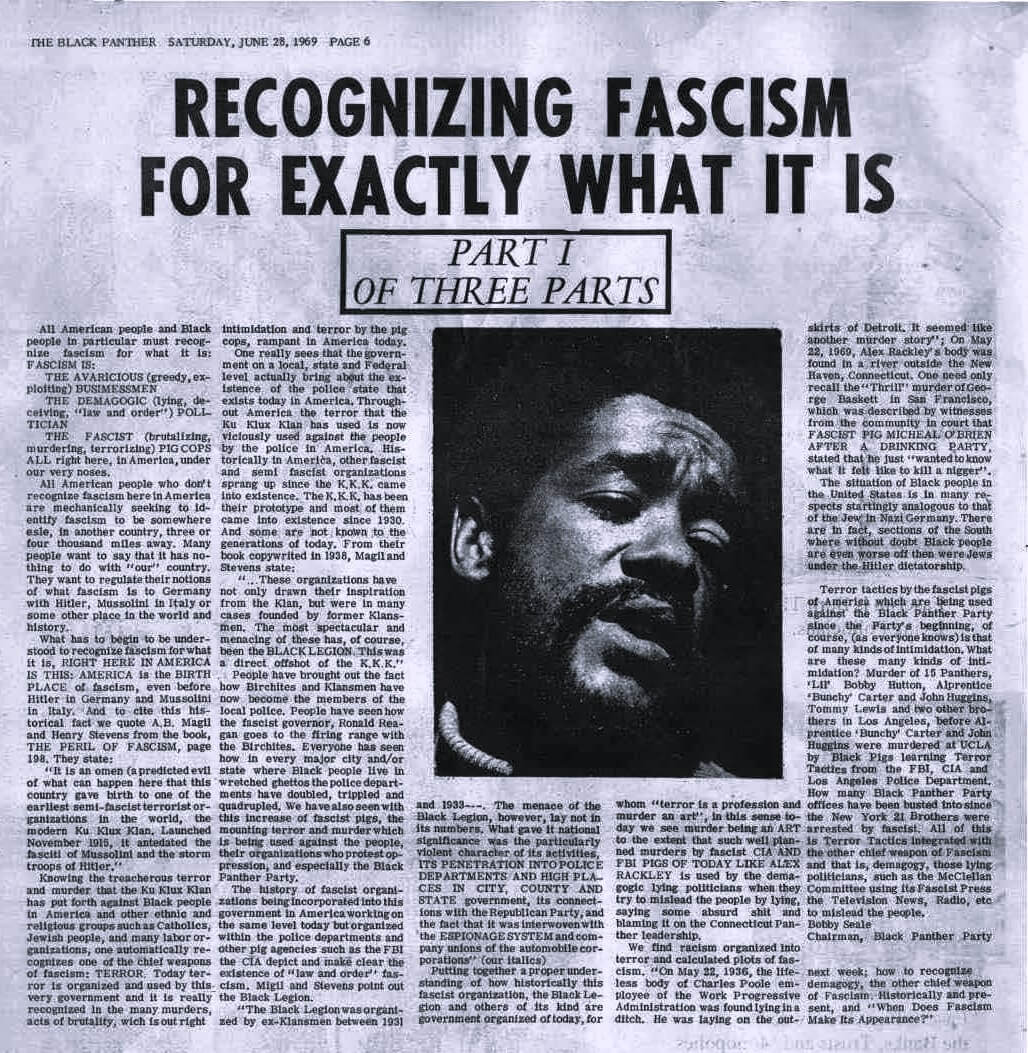
Beyond Brown’s fascist analogies, Bobby Seal of The Black Panther Party argued that US policies were, indeed, explicitly fascist. In a three-part series in The Black Panther newspaper, entitled, “Recognizing Fascism for Exactly What it Is,” Seale historicized his claim, arguing, “The history of fascist organizations being incorporated into this government in America working on the same level today but organized within the police departments and other pig agencies such as the FBI, the CIA depict and make clear the existence of “law and order” fascism.” To drive home Seale’s point, below his essay the newspaper included two full page spread titled “Fascist Pigs” which had photographs of police officers wearing gas masks and wielding batons with captions, such as “Fascist use of Chemical Warfare Against the People” and “U.S. Storm Troops Enjoy Their Work as did Nazis.”[3] Seale asserted that the FBI’s systematic “political imprisonment” and assassinations of Black activists were the equivalent to Gestapos tactics in Nazis Germany. Forced sterilization of Black, Native American and Puerto Rican women, and confining black people to urban ghettos were clear examples of US-style genocide.[4]
Angela Davis shared the Black Panther Party’s critique of the fascist policies and practices of the US government, and she called on Black people and liberal whites to wake up before it was too late. She framed her advocacy of George Jackson, James McClain, William A. Christmas, and Ruchell Magee who became known as the Soledad Brothers, around what she described as the “increasingly fascist features of this society” that included “legal lynching.” Davis came to admire George Jackson’s analysis of “the hypocrisy of Amerikan fascism,” which called out the government for using “legal fiction of conspiracy laws and highly sophisticated frame-ups” in order to “conceal its attack on political offenders” like Angela Davis.[5] George Jackson wondered, “Could anything be more ridiculous than the language of blatantly political indictments: “The People of the State… vs. Angela Davis and Ruchell Magee” or “The People of the State … vs. Bobby Seale and Ericka Huggins.” Actually, as Jackson argued, “The people” needed to learn that these political attacks against Black activists were because they had offended “the totalitarian state” ruled by the “priviledged few” rather than for committing an “offense against the people of that state.” While the FBI’s fascist COINTELPRO had illegally surveiled Davis prior to her defense of the Soledad Brothers, the FBI-led pursuit and capture of Davis on conspiracy charges after the botched jail break of George Jackson, James McClain, William A. Christmas, and Ruchell Magee confirmed to many Black activists the truth in Jackson’s claim.
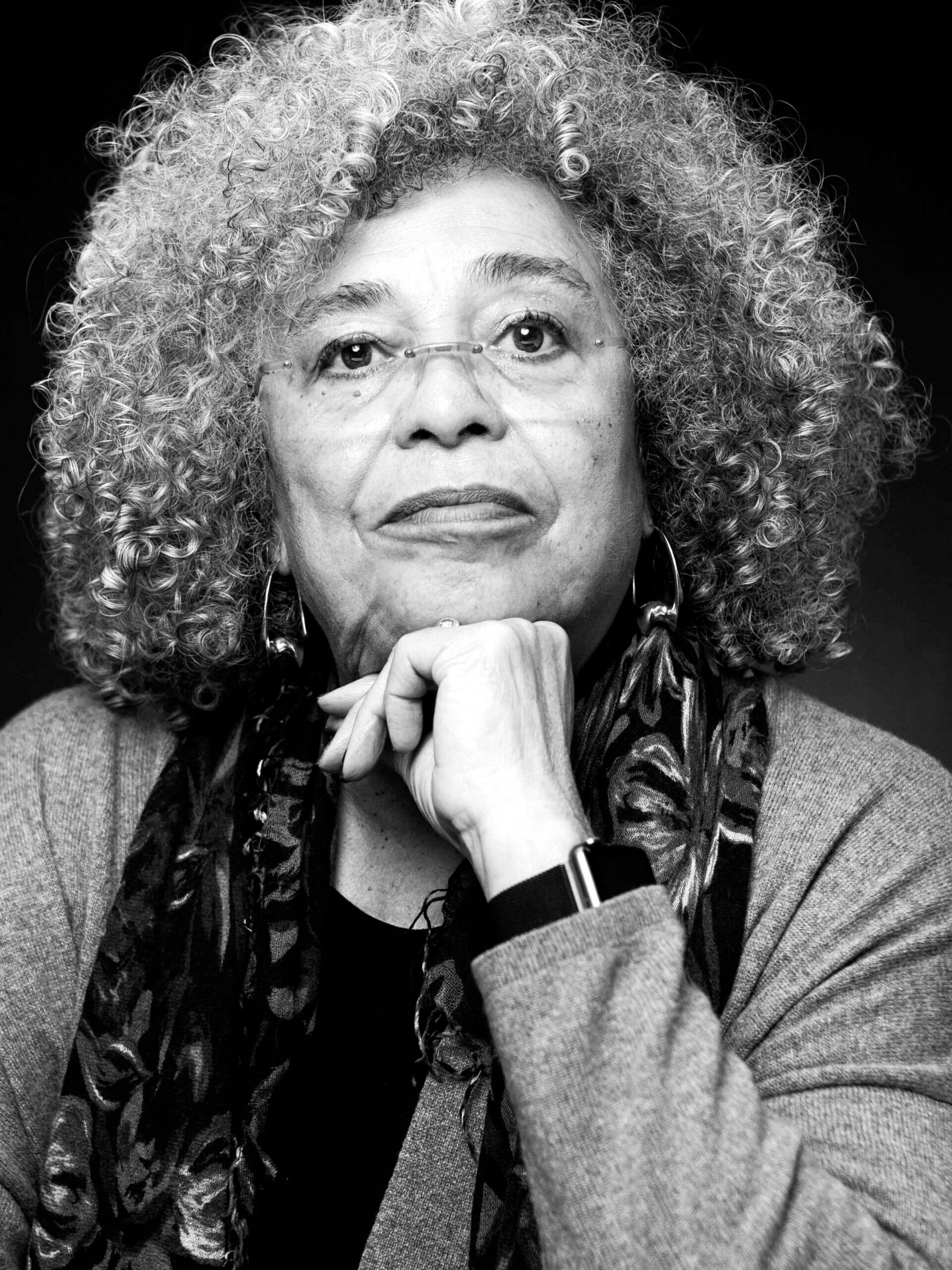
In response to Angela Davis’s false imprisonment, James Baldwin embraced Davis and Jackson’s observations about fascism in the United States. In his open letter to Angela Davis published in The New York Times in January 1971, Baldwin argued, “we live in an age in which silence is not only criminal but suicidal,” and photos of Davis in handcuffs reminded him off the fate of “the Jewish housewife in the boxcar headed for Dachau.”[6] Baldwin’s use of this fascist analogy sought to connect US governments’ repression of Black activists with the fascism that gave rise to the Nazis Party in Germany. Moreover, Baldwin found “The most unbridled expressions of the fascist menace [were] still tied to the racist domination of Blacks, Chicanos, Puerto Ricans, Indians.” Thus, in Baldwin’s opinion, “The only effective guarantee against the victory of fascism is an indivisible mass movement which refuses to conduct business as usual as long as repression rages on.”
Nearly twenty years later, Davis reflected on this period, claiming, “we lived in an era of full-blown fascism” in a time when “J. Edgar Hoover orchestrated a national assault on the Black Panther Party in particular and other organizations that were militant.”[7] Davis and other African American activists described the US government’s repression of the Black Freedom Struggle as clear examples of US fascism in order to push the Black community to rise up and fight against the “gestapo pigs” before the level of repression became such that resistance would be futile. They sought to educate the Black community about the historical and contemporary examples of fascism through print media, conferences, and public rallies as a way of inspiring people to resist authorities, “By any means necessary.” Indeed, as H. Rap Brown declared in 1967, Black Americans stood “on the eve of a black revolution” and only by organizing to fight fascism did they have any chance of avoiding the fate of Jewish people and other minorities during the Holocaust.[8]
[1]For a more thorough analysis of this era see, Anna Duensing, ““A Heritage of Fascists Without Labels”: Fascist Analogies and the U.S Black Freedom Struggle” in Gavriel D. Rosenfeld and Janet Ward, eds., Fascism in America: Past and Present (New York: Cambridge University Press, 2023), pp. 247-277; William Lorenzo Patterson We Charge Genocide: The Historic Petition to the United Nations for Relief from a Crime of the United States Government Against the Negro People (Civil Rights Congress, 1952); WEB Du Bois, An Appeal to the World: A Statement on the Denial of Human Rights to Minorities in the Case of Citizens of Negro Descent in the United States of America in Adom Getachew and Jennifer Pitts, ed., W. E. B. Du Bois: International Thought (New York: Cambridge University Press, 2022).
[2]H. Rap Brown, Die Nigger, Die, p. 138-139.
[3]Bobby Seale, “Recognizing Fascism for Exactly What It Is,” The Black Panther, June 28, 1969, Volume III., No. 10, p. 6.
[4]Angela Davis Interview conducted by Blackside, Inc. on May 24, 1989, Washington University Libraries, Film and Media Archive, Henry Hampton Collection.
[5]George Jackson, Blood in My Eye (New York, 1971), 107.
[6]James Baldwin “An Open Letter to My Sister, Miss Angela Davis” The New York Times Book Review, January 7, 1971.
[7]Angela Davis Interview conducted by Blackside, Inc. on May 24, 1989, Washington University Libraries, Film and Media Archive, Henry Hampton Collection.
[8]“Rap Brown Calls Nation On ‘Eve’ of a Negro Revolt” The New York Times, September 11, 1967, p. 76.