Lest this assertion of familial ties be seen as excluding Black Cubans, poet Nicolás Guillén—then the editor of key Cuban antifascist periodical Mediodía—used his multiethnic Black identity to claim Spain as his own. In the poem “España: Poema en cuatro angustias y una esperanza” (1937), Guillén identified himself as a “son” of America, of Africa, and of Spain. The same year, the Cuban writer spoke at the Second International Writer’s Congress, telling his audience, “I come as a black man.” And, he stated, “the Cuban black is also Spanish.”[3] The propagandists of the AANPE knew the power of evoking bloodlines to connect Cuban sentiments to Spanish republican anguish, and Guillén as a Black Cuban man and an ardent antifascist sought to include Cubans of African descent in this project of solidarity.[4]
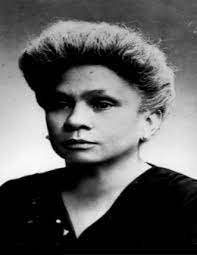
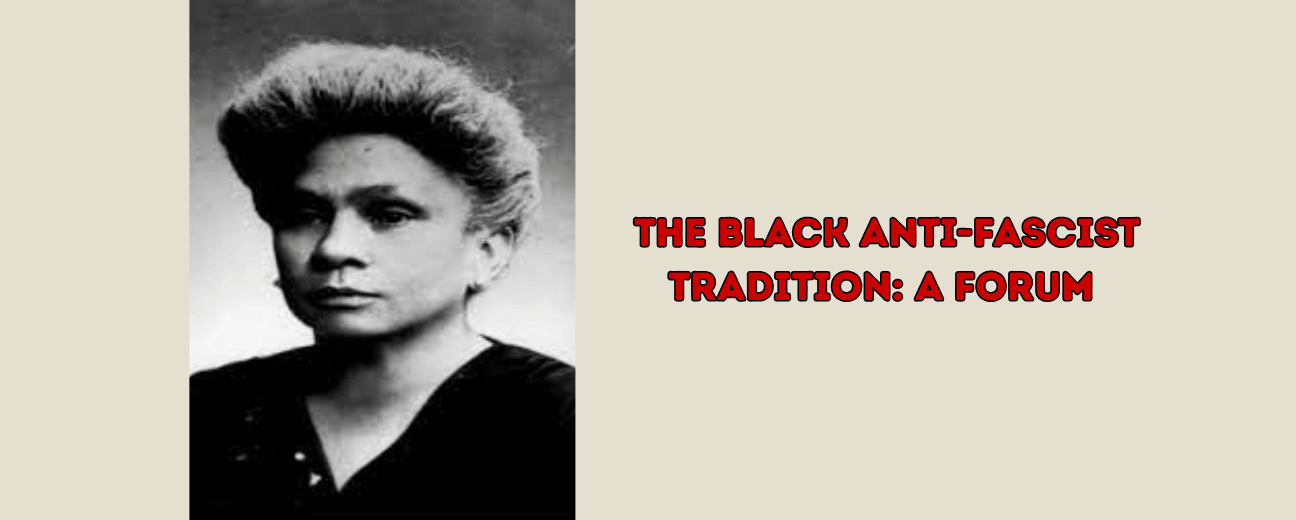
The AANPE sought to promote Rosa Pastora Leclerc as its top representative in Spain. Like many other Cuban antifascists, Leclerc had long been an activist in Cuba’s domestic struggles before the outbreak of war in Spain. Born in Matanzas Province in 1888, Leclerc began working as a teacher at the age of 15, establishing at an early age her lifelong commitment to education. As historian Takkara Brunson describes in her 2021 book Black Women, Citizenship, and the Making of Modern Cuba, Leclerc began her life as an activist in mainstream feminism on the island, serving, for example, as an executive committee member at the Second National Women’s Congress in 1925. Quickly, over the course of a few years, she became radicalized by her disillusionment with groups that focused on charity and excluded or even harmed working-class women. Leclerc went on to become a radical feminist activist, helping to found and moving through several organizations until ending up in the Unión Radical de Mujeres, a socialist group that advocated for the rights of working women, unmarried parents, and children. This organization engaged in anti-dictatorial struggle in Cuba’s Revolution of 1933 and, in Brunson’s words, Leclerc built “a broad political career that translated her work as an educator into the formal arena.”[5] She co-founded a national educators union led by radical activists that went on to advocate for increased school spending. Leclerc, in other words, devoted her activism to the rights and welfare of women and children, and an ideal of education.
When it came time for the AANPE to establish its residential school in Spain, the organization promoted Leclerc as the correct choice to be named the school’s principal due to her commitment as an educator, her personal qualities, and her power as an activist. One AANPE author noted that Leclerc had “made her life a profession of love for children.” The same article described her physically, calling her head “intelligent,” her mouth “willful and firm,” and her hands “skillful and maternal,” while remarking on her eyes “that almost always look at the earth and are the denunciation of her virtuous humility.”[6] These descriptions depict a figure of the good maternal figure: firm, skillful, humble, etc. Other observers called Leclerc “devoted Cuban professor,” a “true pedagogue” of “exquisite sensitivity,” the “personification of Cuban teaching,” and even the “personification of Cuban Majesty.” In one more detailed description, an author depicted Leclerc as a learned and experienced educator, listing numerous thinkers in education along with celebrated schools and pedagogies she had mastered. She was a teacher and an intellectual in addition to being mother-like. Not only, however, did those boosting Leclerc make note of her nurturing and educational qualifications but also they celebrated her proactive antifascism, calling her one who brought to the little Spanish children “the truth of a world that is dawning.”[7] The concepts of a new dawn, a new world, a new Spain, and a new Cuba were common at the time, used by antifascists to energize their fight by defining it as for a better world as much as it was against fascism.
It is clear that the organization was proud of Leclerc and proud to showcase her and her work on behalf of Spanish children. Leclerc ascended to the Vice Presidency of the AANPE. There is a great deal of external praise for Leclerc—and yet there is much less space devoted to her own thoughts, goals, analysis, and feelings. The AANPE bulletin ¡Ayuda!, published monthly during the organization’s life, showcased many members of the campaign as authors repeatedly. The founding president Teté Casuso, an intellectual as well as an activist, published numerous times. Yet readers of this official publication rarely read Leclerc’s own “voice”—there was far more content in the bulletin written about Leclerc than there was written by her. The issue from September 1938 featured an article titled “Los niños de edad escolar y las colonias” by Leclerc, for example, but following a lengthy introduction by another author, the text attributed to Leclerc only rehashed familiar talking points.[8] In December of that year, as conditions in Spain became untenable for many republicans, she assumed a strong activist voice, urging her fellow Cubans to turn their attention to aiding the child refugees in Barcelona. Her sentiment shone through in the same piece of writing when she informed Cubans that the students of the Casa Escuela Pueblo de Cuba did not want to flee to France but rather wished to make the much longer journey to Cuba. The implication was clear: The Cuban school—and by extension its principal—had turned 50 little Spaniards into honorary Cubans.
Yet finding her voice in this way is rare. Seeking Rosa Pastora Leclerc—a Black Cuban woman, a radical feminist, an activist educator—we find an intellectual’s life of action. She spent her years studying and thinking about a vision of the rights and welfare of women and children, and an ideal of education—and by extension, working toward a new dawn, crafting a better world. Unless some cache of her writing emerges in the future, though, we can say that Leclerc was an intellectual whose study and thought led far more to action than to prose.
How can we read her action as an archive? From her activism—in socialism, feminism, education, and antifascism—we glean connections with multiple intellectual traditions. She became a teacher when she was just a child, and her work and passion as an educator guided everything she did. An activist in her 30s, she moved from mainstream to radical feminism as a result primarily of her exposure to class and race discrimination in activist spaces that were predominantly affluent and white. In the Cuban leftist milieu of the 1920s and 1930s, she distinguished herself as an activist educator such that, when it came time to establish the Casa Escuela Pueblo de Cuba as an antifascist refuge for children in Spain, Leclerc was the clear choice to lead the school. In an antifascism that was for a better world as much as it was against fascism, education was the key for Leclerc. And her record of action for a particular vision of education—nurturing and emancipatory—solidified Leclerc’s place in antifascist theory and praxis.
[1] Teté Casuso, “Con los niños que iban en el ‘Mexique,’” ¡Ayuda! Órgano de la Asociación de Auxilio al Niño del Pueblo Español 1, no. 1 (July 1937): 13. This statement reveals a prejudice that the author considered Jewish Cubans to be separate from Cubans generally. Many Jewish Cubans were among those Cubans committed fervently to antifascism.
[2]Angel Lázaro, “Rosa Pastora en Sitges” Ayuda! 2, no. 6 (September 1938): 9.
[3]Nicolás Guillén, speech at Second International Writer’s Congress, reprinted in Guillén, Prosa de prisa (Editorial Arte y Literatura, 1975), 85.
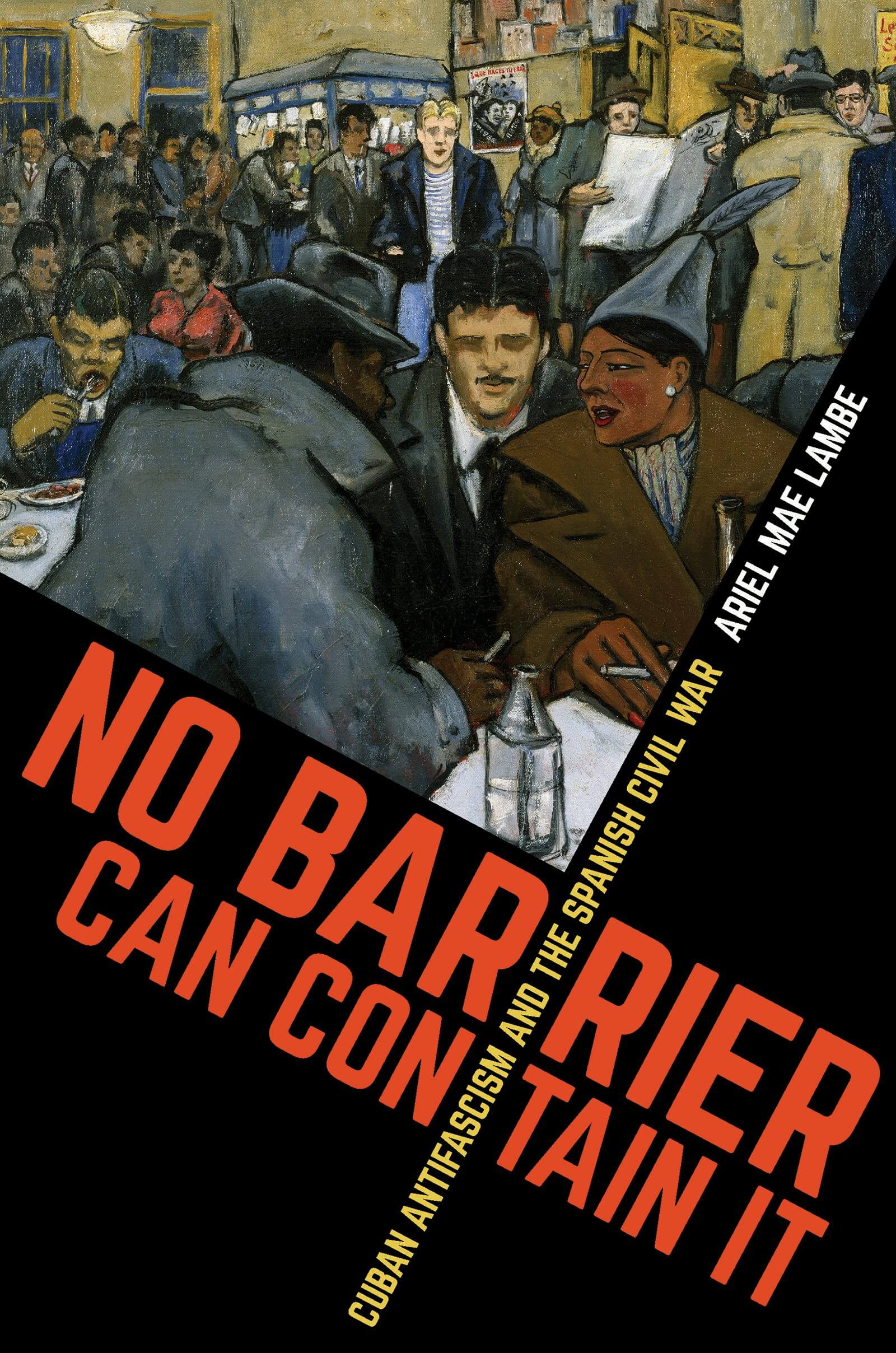
[4]For more, see: Ariel Mae Lambe, No Barrier Can Contain It: Cuban Antifasicsm and the Spanish Civil War (University of North Carolina Press, 2019), 141–147.
[5]Takkara Brunson, Black Women, Citizenship, and the Making of Modern Cuba (University of Florida Press, 2021), 125.
[6]Fernando G. Campoamor, “Rosa Pastora Leclerc,” Ayuda! 1, no. 5 (May 1938): 8.
[7]“EDITORIAL: SALUDO A LA COLONIA ESCOLAR ‘PUEBLO DE CUBA’” Ayuda! 2, no. 6 (September 1938): 3.
[8]Rosa Pastora Leclerc, “Los niños de edad escolar y las colonias,” Ayuda! 2, no. 6 (September 1938): 16–17.