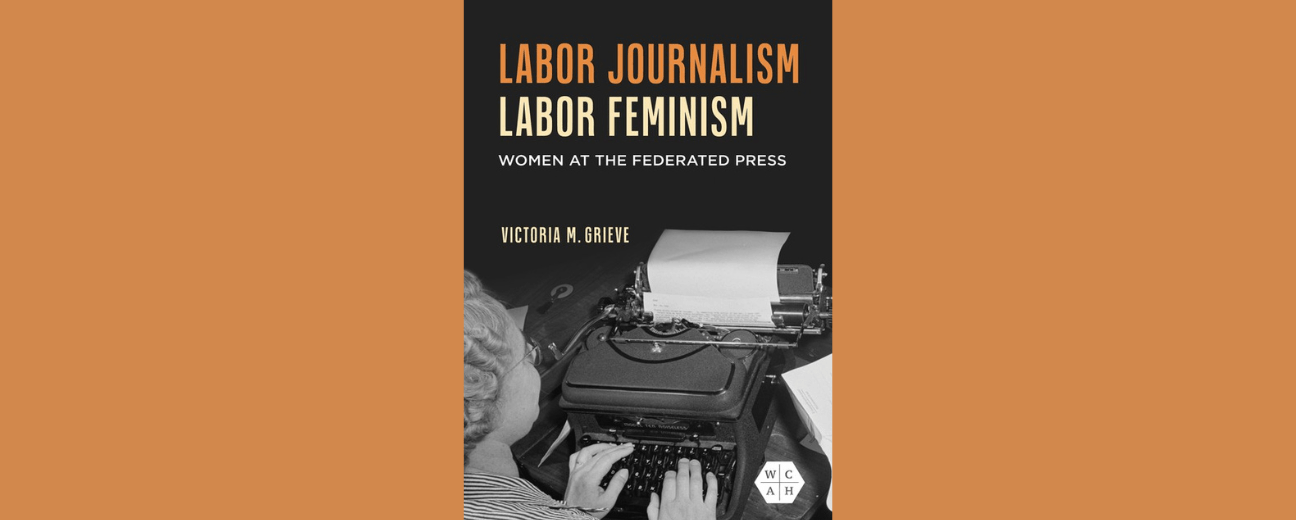
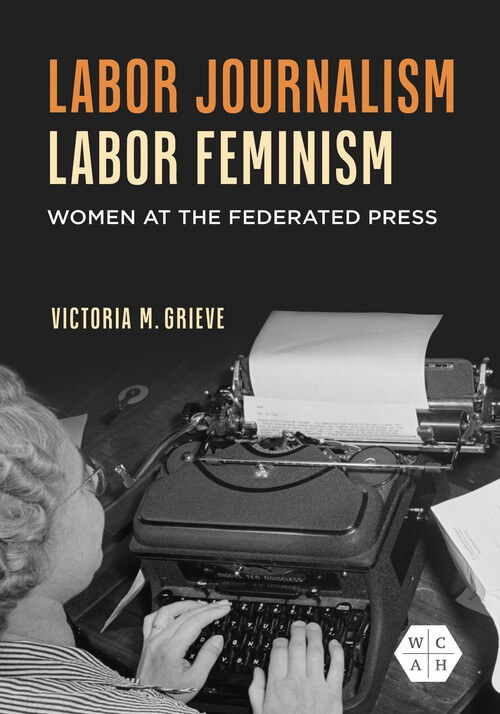
Labor Journalism, Labor Feminism: Women at the Federated Press explores the cooperative labor-focused news service, Federated Press (FP). The FP reached hundreds of labor publications and millions of readers and hired many labor journalists. It also fielded stories provided by unpaid rank-and-file journalists who sought to get the stories of their struggles into the news. Those amateur and professional journalists included a number of women. Grieve’s book is a fascinating exploration of both the Federated Press and women labor journalists in the twentieth century. I recommend it heartily. I asked Grieve some questions, but they only scratch the surface for insights into the labor press, factional politics, ways of seeing and what the loss of this kind of coordinated press service and labor newspapers has meant for labor’s story.
Your book is the first about the Federated Press. Tell us why it is important to document the contributions of this news service, and briefly how it operated, and why it mattered.
The history of the Federated Press matters for the same reasons labor history matters. The press service ran daily news sheets from 1920 to 1956, documenting everything from major strikes to union news, civil rights movements, conservative political and business strategies, and working-class entertainment. It preserves the stories and experiences of millions of Americans who were misrepresented or missing in the mainstream press.
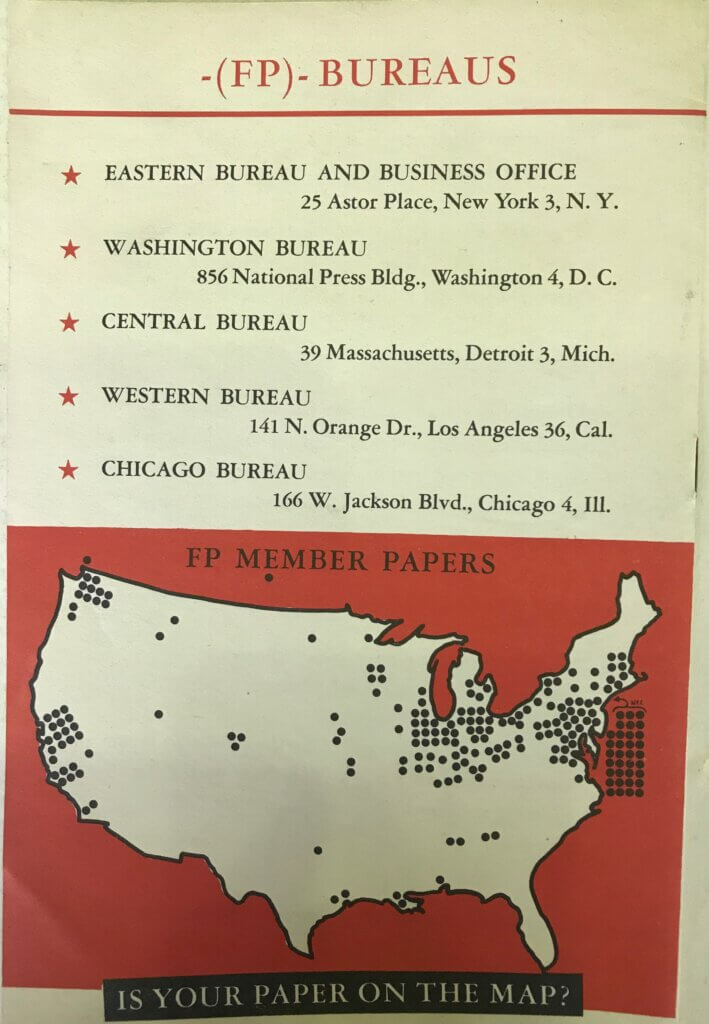
The FP operated from three major bureaus: Chicago, New York, and Washington, D.C. The editorial staff was small and the columnists underpaid, but committed. Correspondents from all over the country, and internationally in the 1920s and 1930s, sent news to the bureaus, where editors condensed it and assembled news sheets containing anywhere from one major story up to seven or eight briefs. The news sheets were mailed every day to subscribing newspapers, where those editors could choose which stories to include in their own papers. The FP aspired to create a labor community through shared news, much like the Associated Press functioned for mainstream newspapers.
I argue that as one of many organizations that created political and social networks on the political left during the height of the labor movement, the FP created opportunities and a voice for women. The FP’s women journalists consistently raised the issues pertinent to labor feminists, including equal pay, the minimum wage, maximum hours, opportunities for advancement, and maternity benefits. They wrote stories about gender discrimination that were distributed to hundreds of labor newspapers, urged women to participate in unions and politics, and pressured union and political leaders to pay attention to the demands of women.
Your book suggests to me that this news service and the way it was organized and structured helped to create a Popular Front, notably beginning in the 1920s, not the 1930s. I looked back at Michael Denning’s The Cultural Front to see if it had even been mentioned, and there was nothing in there. Can you explain how the news service worked at the level of culture with a couple of examples?
Denning’s book argues that the thirties were shaped by more than politics, that theatre, music, movies, comics, and all manner of popular culture reflected a zeitgeist that privileged and celebrated the experiences of the “common man.” The labor movement and union membership grew exponentially after the passage of the 1935 Wagner Act, and subscriptions for the FP reached their peak in 1945. Given the atomized way we consume news today, it’s difficult to conceptualize how important the labor press was to community formation during these decades. Although Denning refers to People’s World newspaper, an FP subscriber, as a “voice of the West Coast Popular Front,” the FP’s absence from his study reinforces my point that we should not overlook the importance of the labor press as a pillar of working class culture during these decades.
Although I don’t focus on popular culture in the book, the FP certainly included a working-class take on contemporary culture. The service included Bill Lloyd’s satirical column, “Dinner Pail Epics,” which used lighthearted jingles and poetry to critique capitalism, politicians, and social trends. Another regular contributor, cartoonist Ben Yomen created Congressman Dripp to lampoon the anti-labor and anti-New Deal Republicans in Congress, while Harold Magin’s comic strip “The John Smiths” found humor in the daily troubles of working-class life.
FP writers also kept tabs on labor-oriented films, as well as those to boycott, such as MGM’s “pro-slavery” bio-pic of President Andrew Johnson (1942) and Disney’s racist Uncle Remus (1944). Book reviews of Jessica Smiths Women in Soviet Russia (1928) and Mary Heaton Vorse’s Strike! are just two examples of hundreds of books suggested to working-class readers over the decades.
Finally, FP reporters publicized summer school programs for working women, such as Bryn Mawr, and announced new offerings at labor colleges such as the California Labor School and Brookwood Labor College. There was a self-conscious awareness of the importance of these cultural aspects of working-class life. Helen G. Norton wrote in 1930 that organized labor had to focus on building its own cultural enterprises to “mold people’s minds during their leisure hours” (FP, December 1, 1930).
That is so interesting. I was thinking as I read it that from the 1920s onward, with all the intense repression, divisions and factionalism, FP managing editor Carl Haessler organized a media front that brought together labor journalists of various ideological leanings that ended up reflecting issues of working class life from the bottom up. This was journalism from below. The women you profile did not agree politically, but their ways of seeing elevated women’s issues. Tell us why you chose the four women you profile in the book’s chapters, and how their way of seeing the news was different from the men in the service.
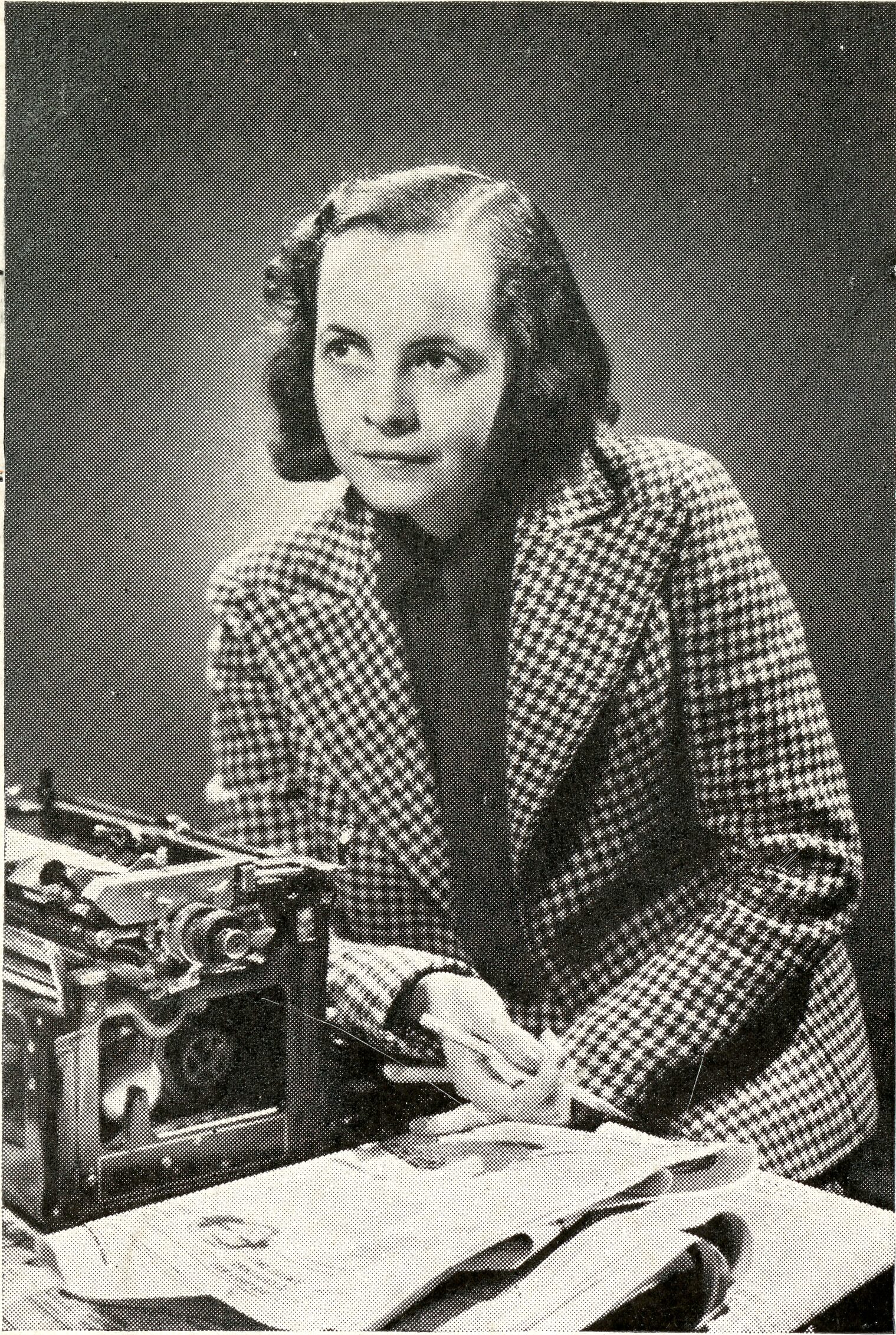
Jessie Lloyd O’Connor, Julia Ruuttila, Virginia Gardner, and Miriam Kolkin dedicated their lives to the labor movement and believed deeply in its potential to create a democratic society. Their careers span the lifetime of the FP and allowed me to explore how feminism moved from the labor movement to the mainstream. Betty Goldstein, better known as Betty Friedan, worked for the FP but her story had already been brilliantly explained in Daniel Horowitz’s book, Betty Friedan and the Making of the Feminine Mystique (University of Massachusetts Press, 2000). Miriam Kolkin’s career bears a remarkable similarity to Goldstein’s, but Kolkin remained relatively unknown. These four women were among the most prolific and longest tenured writers for the FP, so I had access to their published work, and they left sizable archival collections of personal papers that allowed me to explore the interplay between their personal lives and careers.
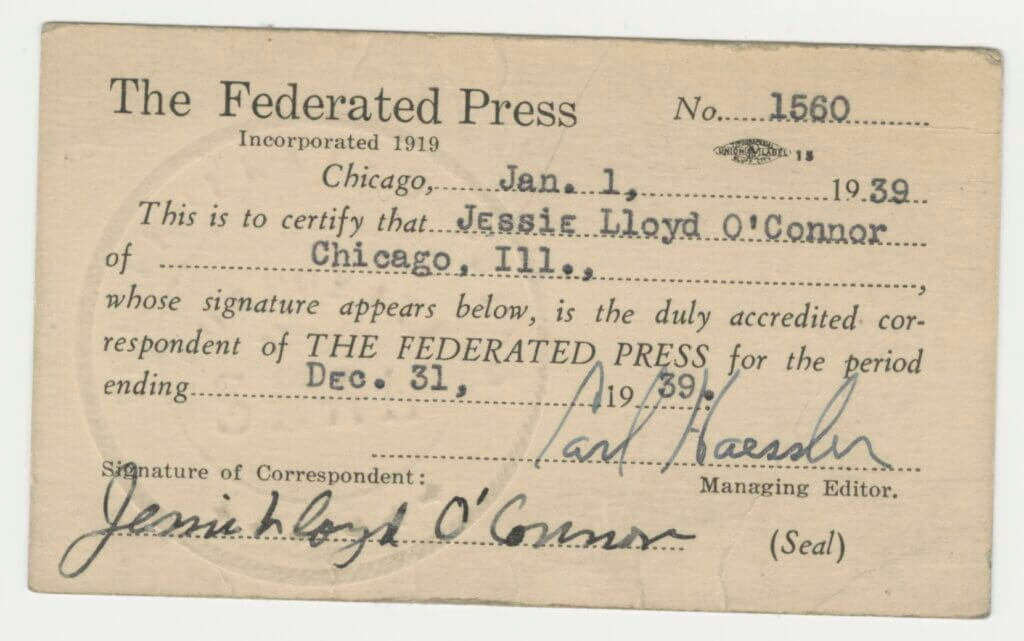
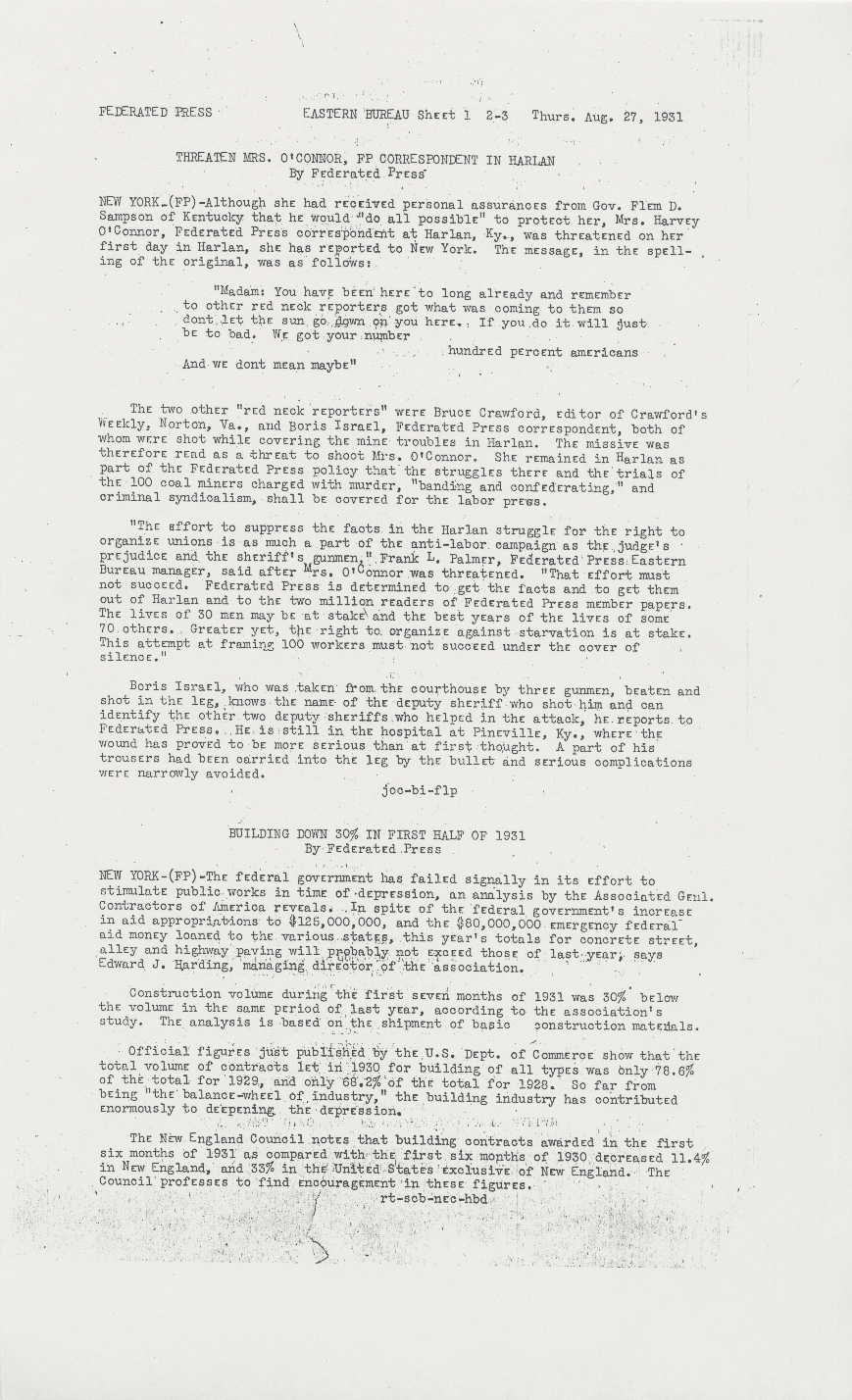
In the book I suggest several ways that these journalists saw the news differently from their male colleagues. An early example involved how they covered the aftermath of the Russian Revolution. While male reporters tended to focus on high-level politics, Jessie Lloyd O’Connor and Anna Louise Strong talked to women about their daily lives, visited hospitals and factories, and tended to insert themselves through use of the first person in their stories. All of these factors combined to create news stories that depicted ordinary people’s lives in the midst of historic upheaval, and what they hoped would be the beginning of a socialist nation.
To put it perhaps too bluntly, the FP’s female reporters saw women where their male colleagues did not. They interviewed women strikers on picket lines outside textile mills, published studies gathered from the US Women’s Bureau, and reported on women’s organizing in industries that unions overlooked, such as hairdressers, laundresses, and flight attendants. Male FP reporters very rarely focused on women.
You suggest that the women and the way they looked at the news also increased the coverage of issues of concern to other minorities, that women’s perspectives clearly made a difference in what was considered labor questions. Can you give an example of how your book discusses this.
The women I discuss in the book understood marginalization, discrimination, and invisibility not just theoretically, but from lived experience. Each of them had experienced discrimination at some point during their career, and each of them understood how class and gender intersected in particular ways to limit working class women. World War II highlighted a problem working mothers had always struggled with: the lack of childcare. According to working women, this was not an individual, personal problem, but a social and labor issue that required a comprehensive solution.
Another reason why these women were attuned to racial issues is because the CIO insisted on racial unity to overcome employer strategies of hiring minority strikebreakers and keeping wages low. Racial antagonism favored employers and kept workers from cooperating. FP reporters regularly published stories about racial discrimination, often gathering news and stories directly from the NAACP, the Urban League, and other organizations representing racial or ethnic minorities.
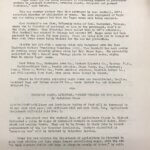
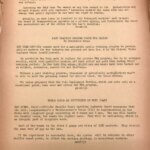
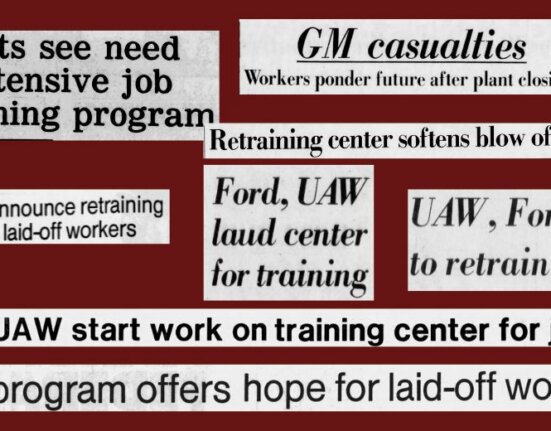
Above: Open the images for some examples of Federated Press Reports from 1942-1943 shows the diversity of stories about labor’s fortunes. Credit: Federated Press Records, Columbia University, New York.
You show how the contributions of these women build an understanding of the role of labor feminism in the mid-20th century. Can you highlight a few of your conclusions and give an example?
The main goal of my book was to show how the labor press amplified the demands of labor feminism for equal pay, the minimum wage, maximum hours, opportunities for advancement, and maternity benefits. Typically, and I think correctly, scholars have emphasized the role of women acting through their unions – particularly the UE and the UAW – and of women’s organizations, such as the US Women’s Bureau, as catalysts for this movement. But I think it is crucial to remember that the labor press had an enormous readership in these decades, and that female reporters kept working womens’ issues visible on the pages of the nation’s labor newspapers. FP reporters explained the longstanding opposition of labor feminists to the Equal Rights Amendment. They routinely demonstrated the fact that working women, most of whom needed to work to support their families, were disadvantaged by unequal pay and the lack of maternity provisions. Their reporting on women-led strikes implicitly challenged the idea that women couldn’t be unionized. All of these were important contributions to labor feminism.
Your later chapters suggest some insights for the New Left. Can you elaborate?
Miriam Kolkin most clearly serves as the bridge between the Popular Front and the New Left, and from labor feminism to 1960s feminism. She was a generation younger than Jessie Lloyd, Julia Ruuttila, and Virginia Gardner. She joined the Communist Party in the 1930s, and began writing for the FP during the war, eventually moving up to news editor in the New York bureau. She worked for the service until it closed in 1956, but only five years later was among the founders of Women Strike for Peace (WSP), which is typically seen as a forerunner of 1960s protest organizations. Of course, from Kolkin’s perspective, WSP was not the beginning of a new political moment but the culmination of many years of leftist political activity and journalism.
The Federated Press itself served as a model for a New Left press organization, the Liberation News Service (LNS), an alternative press service founded in 1968 by radical student activists Marshall Bloom and Raymond Mungo. The LNS provided news of the counterculture and the New Left to hundreds of subscribing underground publications, and included feature stories, opinion pieces, poetry, photographs, cartoons, and art. Bloom and Mungo reached out to Carl Haessler, the FP’s managing editor, and to Miriam Kolkin for advice as they were getting started. So there is a beautiful continuity here of people and ideas, from the Old Left to the New Left.