LaborOnline New Book Interviews

Cory Haala on his new book, When Democrats Won the Heartland

When Democrats Won the Heartland (2026)

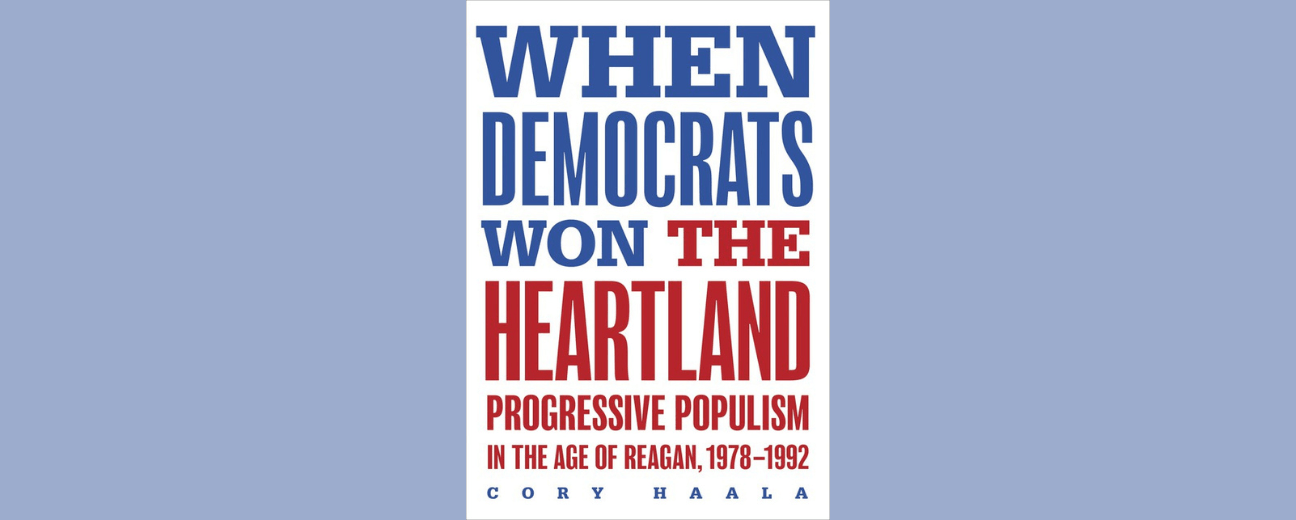
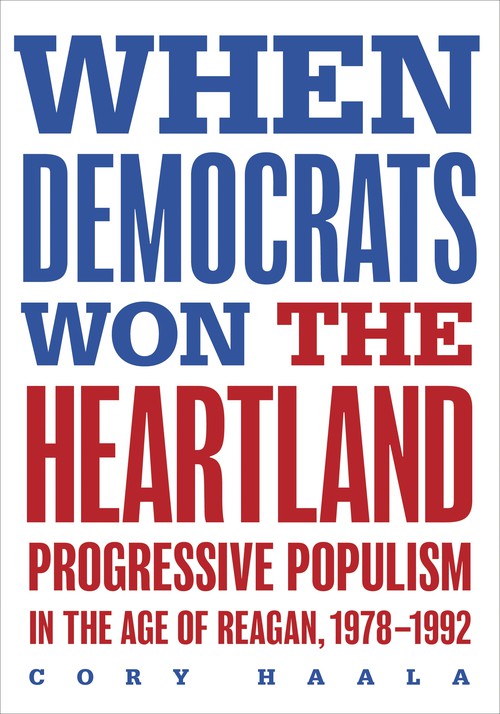
Cory Haala’s new book, When Democrats Won the Heartland: Progressive Populism in the Age of Reagan, 1978-1992 (University of Illinois Press, 2026) tells the story of the Midwestern farmer-labor coalitions of the 1970s, 80s, 90s, and their many efforts to steer a new direction for the Democratic Party. These Progressive Populists, as Haala calls them, called for moratoriums on farm foreclosures, stricter plant closing laws, lower taxes on ordinary people, and higher taxes on banks, agribusiness, utilities, and mines. Their grassroots coalitions, which elected dozens of Democrats to public office in the 1980s, included white and Black trade unionists, feminists, Native Americans, religious leaders, and of course, ordinary farmers.  The book challenges readers to reckon with how we ought to tell the story of the Midwest during the “Culture Wars” of the late twentieth century. That is, while it is easy to point to the rise of the Religious Right as an inevitability in rural America, Haala reminds us that there were still many heartland coalitions maintaining and reinventing progressive traditions around visions of economic justice and democratic pluralism. Haala’s well-researched and well-written book holds up a real alternate possibility for both the national Democratic Party platform, both in the late twentieth century and today. 

I got a chance to chat with Cory Haala about this midwestern “Progressive Populism” as well as the question of how to frame this movement.

Your book begins with midwestern Democrats’ rediscovery of the early twentieth century Non-Partisan League. Can you remind us what the Non-Partisan League was and why its history and memory became important to midwestern Democrats in the 1970s?

The Nonpartisan League, to borrow from Michael Lansing’s excellent 2015 history of the movement, was a farmers’ movement that began in western North Dakota in 1915, spreading across the Midwest and Great Plains—including the Canadian prairie provinces—that challenged the mal-concentration of wealth in the capitalism of the late Gilded Age. As a progressive wing of the state’s Republican Party frustrated with the control of outstate capital like the Pillsbury mill in Minneapolis, they and their allied farmers took control of the state’s Republican Party and set up a state-run Bank of North Dakota and State Grain Mill and Elevator. (The State Bank and State Mill are both still operating today!)

This message really resonated with farmers in the Midwest in the late 1970s as the farm economy began to collapse. As historian Pamela Riney-Kehrberg documented in Iowa, the “Go-Go Seventies” were characterized by Richard Nixon’s Secretary of Agriculture, Earl Butz, famously—and ominously—telling farmers to “get big or get out.” Farmers upgraded machinery, bought and planted more land, and took on debt to do so. But the bubble burst: farmland’s value hiccupped, and Jimmy Carter’s grain embargo in response to the Soviet Union’s invasion of Afghanistan accelerated a depression in the rural Midwest. Farmers, dealing with low prices for their products, the deregulation of railroads, and increasingly concentrated industries like meatpacking, had seen this movie before.

(No, literally: the 1978 film Northern Lights, a Cannes award-winning movie about the establishment of the Nonpartisan League, had spread like wildlife not only in North Dakota—where many locals were extras in the movie—but was screened in places like Adair County, Iowa, by some of the farm activists I document in the book.)
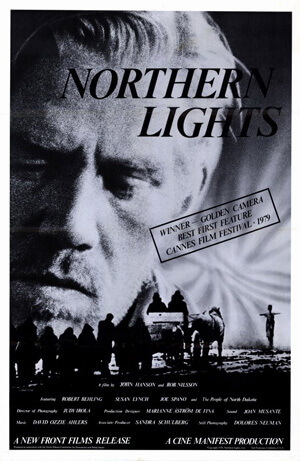
Film poster, Northern Lights (1978).

The Nonpartisan League was one of many regionally-unique examples—like the Minnesota Farmer-Labor Party or the Wisconsin Progressive Party, a continuation of Robert La Follette Sr.’s political platform led by his sons in Depression-era Wisconsin—that activists turned to across rural and urban settings as the Midwestern economy collapsed in the 1980s.

As your book shows, late twentieth century midwestern Democrats developed a tradition you call “Progressive Populism” which won many elections, including several governorships, in a time period we usually associate with the rising tide of the Republican Party (1978-1992).  What did this coalition represent and why do you think they had the success they did? 

As much as they pushed back against the free-market economics of Ronald Reagan and the Republicans—their continuation of tight money and deregulation only compounded the Midwest’s twin challenges of the Farm Crisis and deindustrialization—these “progressive populists” represented a break with the national Democratic Party as well. In a decade that historians of liberalism have associated with the rise of the neoliberals, the Democratic Leadership Council, and the “New Democrats” (read: Bill Clinton! finally, a winner!), I argue that Democrats at the state and local level had already figured out a winning formula—economic populism and citizen-led democracy.

This coalition began at the grassroots through activist organizations like the Iowa-based North American Farm Alliance (NAFA) and Minnesota Citizens Organized Acting Together (COACT). They saw working-class solidarity—think about the “Farmer-Labor Party” not just in name, but in coalition—as necessary to overcoming those things that had torn apart the old “labor-liberal” coalition in the 1970s: the race-baiting, gender-politicking, and militarization-pushing single-issue campaigns of the 1978 and 1980 campaigns. To put a working-class coalition back together, groups like NAFA and COACT led “Farm-Labor Solidarity Day” events in 1983, for example: farmers brought surplus food to unionists and community centers in Waterloo, Minneapolis, and Duluth, engaging in conversations with Black community members and union workers about their shared struggles.

This movement percolated upwards into economically-populist campaigns for everything from Public Utility Commissioner and Commissioner of Agriculture to governor of Minnesota and U.S. Senator from Iowa. Activists not only did the organizing legwork, though—they often found themselves with a seat at the table when it came time to do the policymaking: Minnesota Gov. Rudy Perpich appointed a farm activist, Anne Kanten, to be Deputy Commissioner of Agriculture; members of Brookings-based Dakota Rural Action worked with Rep. Tim Johnson of South Dakota on the 1990 Farm Bill. 

It was authentic solidarity built at the grassroots around an important shared sense of place and struggle. These were Midwesterners, working to save their communities from outside forces—from capital and conservatives to the Democratic Party, the latter of which in the 1980s angered them in all sorts of ways: adopting superdelegates in the presidential nominating process, withholding Minnesota’s and Wisconsin’s seats at the Democratic National Convention until they agreed to drop their open primaries in favor of caucuses, and ignoring Midwestern proposals to structurally reform family farming and slow the national push toward free trade agreements.

Let’s talk about the struggles which Progressive Populists faced. Tell us first about their struggles with Democrats in other regions of the country, especially as the national party made decisions in 1984 and 1988 about how to focus their platform. Why do you think the national party downplayed progressive populist demands in favor of a neoliberal agenda? 

Getting the national party to care about agricultural issues was tough in and of itself! Beyond that and in addition to producing different commodities here (especially milk, but corn as well), states and voters in the Midwest had intentionally—primarily in the 1930s and again in the 1970s—passed “anti-corporate farming laws” that limited who could own and farm the land. In addition, the Reagan Revolution of 1980 had brought in a number more neoliberal and conservative Democrats into regions like the South and West; when laws like the 1981 tax bill came up, those regions’ Democrats voted with Reagan. So too on farm policy reform and free trade were there inherent challenges in reaching “New Democrats” in the Northeast: voters and politicians there valued cheaper farm products, and so they were okay taking trade-offs like environmental provisions in the Farm Bill (“swampbuster” and “sodbuster” clauses) for lower price supports for farm commodities that disproportionately hurt family farmers relative to larger corporate farms.

This extended though, too, into the “people power” approach of these Midwestern populists: they challenged the role and influence of “big money” in politics. Politicians like Paul Wellstone and Tom Harkin emphasized their work with these grassroots groups like COACT and the Iowa Citizen Action Network, respectively, and in the case of Harkin and Texas Agriculture Commissioner Jim Hightower, established venues like the New Populist Forum to talk about issues and how they could empower people over corporations. That was at odds with a changing national Democratic Party, which under chair Chuck Manatt and alongside fundraising outfits like the Democratic Congressional Campaign Committee (featuring a young Rahm Emanuel) sought to bring that sweet, sweet corporate PAC money into the Democratic fold. Is a party reliant on corporate money and prioritizing the voices of “superdelegates”—the party “elite”—going to mesh with these grassroots politics?


It was authentic solidarity built at the grassroots around an important shared sense of place and struggle. These were Midwesterners, working to save their communities from outside forces—from capital and conservatives to the Democratic Party, the latter of which in the 1980s angered them in all sorts of ways.


You show that Progressive Populists also met organized resistance from conservatives within their own states, especially on classic culture wars issues like abortion and gay rights. How did Progressive Populists handle this opposition? Do you think that Midwestern Progressives’ ways of handling and redirecting these debates might have appealed outside the Midwest?

Often by seeking to appeal to the “bottom line” – that fairness, opportunity, and a level playing field made things safer for everyone. Paul Wellstone’s famous line was “We all do better when we all do better,” which I think summed up the vision of the progressive populists: rather than focusing on what divided “the people,” they focused on what united them—they were getting screwed over by a common enemy.

There’s one vignette in the book that I think sums it up the tensions here rather well, and it involves North Dakota congressman Byron Dorgan filibustering a question about abortion by talking about the Farm Bill. It didn’t necessarily convince either his detractors or abortion rights advocates—who continued to angrily push him on this, privately—but it often succeeded in reframing the pressing questions of the day in terms of “Who rules?” 

Your book enters into a vibrant historiography exploring the rise of neoliberalism in the late twentieth century. I have thought about assigning this book to students alongside Melinda Cooper’s Family Values: Between Neoliberalism and the New Social Conservatism (2016) and Kristin Swinth’s Feminism’s Forgotten Fight: The Unfinished Struggle for Work and Family (2018). Taken together, your books emphasize how the Democratic Party’s transition from “Great Society” liberalism to neoliberalism was not at all inevitable.

But, I have to admit that I feel conflicted about cheering on the possibility of a grassroots coalition representing “pocketbook issues” and papering over the very substantial debates of the day on whether “strong families” were enough to address the majority of social problems. At times, I wonder if “Progressive” is the best way to describe a farmer-labor coalition that had so little to say about entitlements of the poor and disabled to a universal basic income, healthcare, high-quality public education, and sexual freedoms. What would you say were the costs and benefits to pursuing this class-based political strategy in the 1970s and 1980s Midwest?

Well, first, I’m honored to be considered alongside those works, even if I wanted my book to be about an alternative to neoliberalism! 

A challenge in writing this book was navigating the very tensions you’re describing here—how do you talk about race in a region built on colonization (and at least partially committed to upholding that, as I document in the politics of the Wisconsin Walleye Wars) and that was still, by 1990, 92% White in the “most diverse” state (Wisconsin)? How do you talk about sexual politics when even the champions of this “progressive populist” movement are going to vote for the Defense of Marriage Act in 1996? 

The big reasons I use “progressive populist,” though, is because (1) that’s how they define themselves, and (2) that’s the political tradition they’re relying on. Jim Hightower was making pilgrimages to Lampasas (the site of the first meeting of the Texas Farmers Alliance), calling himself a “progressive populist,” and advising Jesse Jackson to do the same during the civil rights leader’s 1988 presidential bid. Tom Harkin was giving speeches about how Robert La Follette, if he were alive in 1985, would be a populist Democrat. And they were rooting that understanding of “progressivism” in the anti-corporate spirit of regulation and reform of these past political traditions in the Midwest—the populists against the railroads, the progressives against the meatpackers, the people against capital.

(And Harkin certainly would have pushed back against the idea that he, the author of the Americans with Disabilities Act, had nothing to say about those entitlements.)

They were rooting that understanding of “progressivism” in the anti-corporate spirit of regulation and reform of these past political traditions in the Midwest—the populists against the railroads, the progressives against the meatpackers, the people against capital.


Downstream of them, though, I think the “average people” electing and supporting them were more progressive than we give them credit for. Groups like COACT and Wisconsin Action Coalition spent much of 1991 and 1992 laying the groundwork for public support of universal health care—to the point that their membership felt sold out by the Clinton Administration’s failure on that point. We sometimes forget that in states like Iowa, the work of LGBTQ advocates at the community level precipitated the state supreme court’s legalization of same-sex marriage in 2009.

That’s not to say that this was a universally progressive movement, of course—and certainly not a universally progressive set of politicians. Figures like Harkin and Wellstone were as guilty as any of “taking votes” to set up their reelection bids; they believed they were doing it to keep together as large a tent as possible while working to improve everyone’s financial and political well-being in a way that, they hoped, would eventually render some of the region’s and nation’s racial and gendered shortcomings moot. 

Their decisions still deserve scrutiny, and it’s my hope that my book sets up other scholars to be critical of those decisions but to consider them in the context of the coalitions they had built and the seats they had won. The costs were a wavering commitment to sexual freedoms, Native rights, and more; the benefits were four Democratic senators from North Dakota and South Dakota from 1997-2005, three from 1987-1996 and 2005-2011, senators who were very progressive and populist on economics relative to the Democratic Party.

Finally, take us up to 2010 or even the present. What is the legacy of these Midwestern Progressive Populists? What does a study of their history help us to understand better in our current day?

The movement sputtered: Tom Harkin ran an ill-fated campaign for the Democratic presidential nomination in 1992. Paul Wellstone died in a 2002 plane crash, just weeks from (likely) winning a third term. Tom Daschle of South Dakota lost his reelection bid in 2004. On and on it goes—and, on top of that, these politicians elected to federal offices often had fraught relationships with their state-level Democratic parties, which political scientists have done fantastic work at noting have been hollowed out and struggled amid the nationalization of American politics.

That story continued at the grassroots: activists failed to win farm reform, or trade reform, or health care reform. They didn’t stop showing up—events like Farm Aid lived on, Midwesterners played a big role in protesting the World Trade Organization at the 1999 Battle of Seattle, and groups like COACT continue pushing for health care reform even today. 

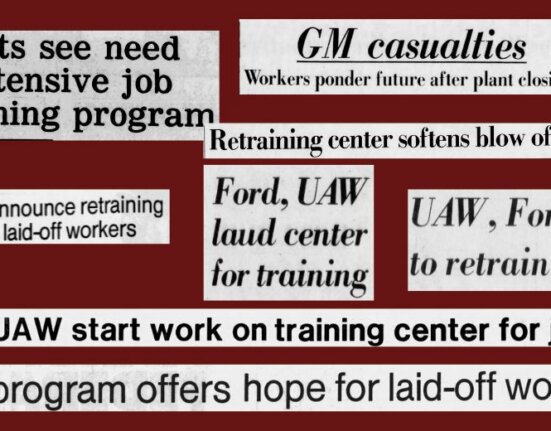
But showing up is expensive when you have a farm to run or a family to feed, to say nothing of pre-existing medical conditions or laws that increasingly restrict government support. Farm prices improved just enough to stifle the movement—as hundreds of thousands of farmers “got out”—and businesses broke unions and pushed “retraining” onto workers. Voters often blamed the party—the Democrats—that ushered in this era of financialization and globalization in the 1990s, even if the deregulatory and war-making policies of the 2000s exacerbated them. The culture wars of the 1990s didn’t lead to progressive populists being voted out en masse in 1994, as the story goes, but they did drive the same wedges of race, gender, sexuality, and patriotism back into a Democratic populist movement that was always fragile—as you mentioned earlier, that often “paper[ed] over” some of the thornier questions. I would argue that they papered over them not because they were unsympathetic to the causes, but because they genuinely believed they could win out in the long run. That doesn’t absolve them, of course; it humanizes them in their errors.

And it allows groups today and in their immediate aftermath to pick up where they left off, to borrow what they might, and to revive what they can. After Wellstone’s untimely death, his campaign staff established Wellstone Action, a training organization for activists and politicians who wanted to “Win the Wellstone Way” through a triangle of community organizing, electoral politics, and progressive policymaking. Politicians like congressman Dave Loebsack of Iowa, Governor Katie Hobbs of Arizona, and Minnesota’s gubernatorial partnership of Tim Walz and Peggy Flanagan attended Camp Wellstone and number among its alumni. Understanding both their accomplishments—and their unfinished business—ought to (and, I believe, does!) inspire working-class politics in the present day.

Authors

  • Janine Giordano Drake

    Janine Giordano Drake is Clinical Associate Professor of History at Indiana University, where she specializes in the history of labor, religion, and social movements. Her first book, The Gospel of Church: How Mainline Protestants Vilified Christian Socialism and Fractured the Labor Movement (2023) told the story of the Social Gospel movement from the bottom up. Her current work explores how the labor movement debated fair taxes for public education and welfare from the 1780s to the 1960s.

  • Cory Haala is Assistant Professor of History and the Museum Studies Coordinator at the University of Wisconsin-Stevens Point. His first book, When Democrats Won the Heartland: Progressive Populism in the Age of Reagan, 1978-1992 (University of Illinois Press, 2026), examines how progressive activists rebuilt the Democratic Party in the Midwest in response to the Reagan Revolution.

<span data-olk-copy-source="MessageBody">Janine Giordano Drake is Clinical Associate Professor of History at Indiana University, where she specializes in the history of labor, religion, and social movements. Her first book, <i><a href="https://global.oup.com/academic/product/the-gospel-of-church-9780197614303">The Gospel of Church: How Mainline Protestants Vilified Christian Socialism and Fractured the Labor Movement</a> </i>(2023) told the story of the Social Gospel movement from the bottom up. Her current work explores how the labor movement debated fair taxes for public education and welfare from the 1780s to the 1960s.</span>