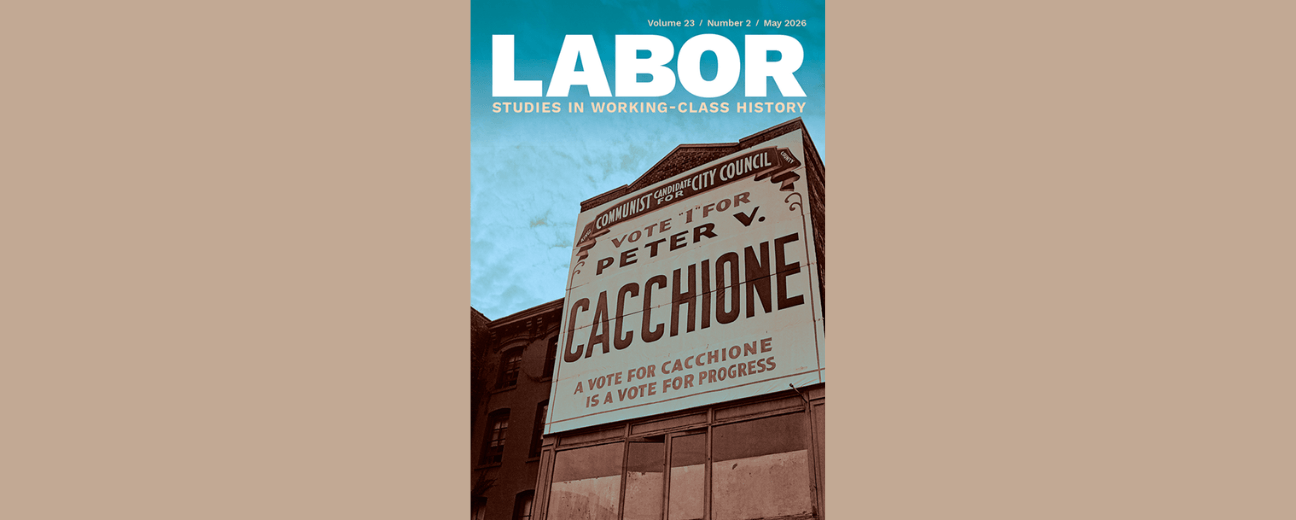
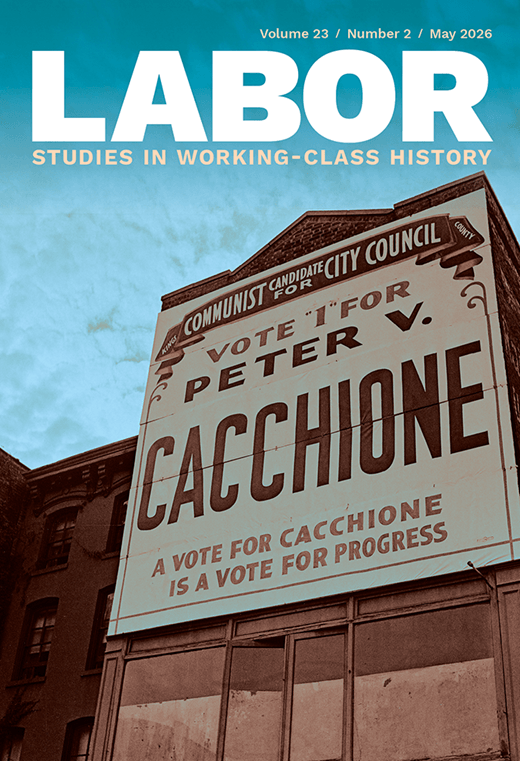
The new issue of Labor: Studies in Working-Class History, Volume 23:2 is out now. Thanks to Duke University Press, an essay by Kim Phillips-Fein, “The Vision of the Municipal Left: Peter V. Cacchione and New York City, 1930s–1940s,” is available for free until August 31.
The election of Zohran Mamdani as mayor of New York City in November 2025 has raised questions about the long history of working-class politics in the city and the historical moments when left-wing political and social movements have brought these into the mainstream of the metropolis. As many have observed, much of Mamdani’s agenda, both on the campaign trail and in office, seems to look back to post-World War II New York, when new public housing was regularly constructed in the city, rents were more heavily regulated, and keeping the cost of transit low was a major and popular political issue.
But what enabled that postwar city to thrive? Mamdani has often described Mayor Fiorello H. La Guardia as the greatest mayor in the city’s history. His final campaign video, though, paid homage to a different, less well-known political figure: the Italian-American Congressman Vito Marcantonio, who represented East Harlem for seven terms between 1934 and 1950. Marcantonio’s career points to the vibrancy of left-wing politics in the city during the 1930s and 1940s, raising the question: How much of what La Guardia accomplished grew out of the intense political ferment of New York in the decade, and especially the strength of left-wing organizing?
My essay in the current issue of Labor takes up a political figure less familiar still: City Councilmember Peter V. Cacchione, who was one of two Communist Party members elected to the City Council during the period in the late 1930s and 1940s when New York City adopted a system of borough-wide proportional representation for these positions, though not for the mayoralty. The same anti-Tammany coalition that had brought La Guardia to City Hall supported “PR,” seeing it as a way to break the power of the Democratic Tammany machine—and indeed, a host of candidates representing the Republican Party as well as smaller parties including the Liberal Party, American Labor Party, and the Communists were able to win office. First winning election in 1941, Cacchione was re-elected in 1943 and 1945, each time with more first-round votes than the previous. (Benjamin J. Davis, Jr,, a Black Communist Party leader, was the other Communist in the City Council, representing Manhattan and elected in 1943 after Adam Clayton Powell, Jr., the first Black City Council member, was elected to Congress representing Harlem.)
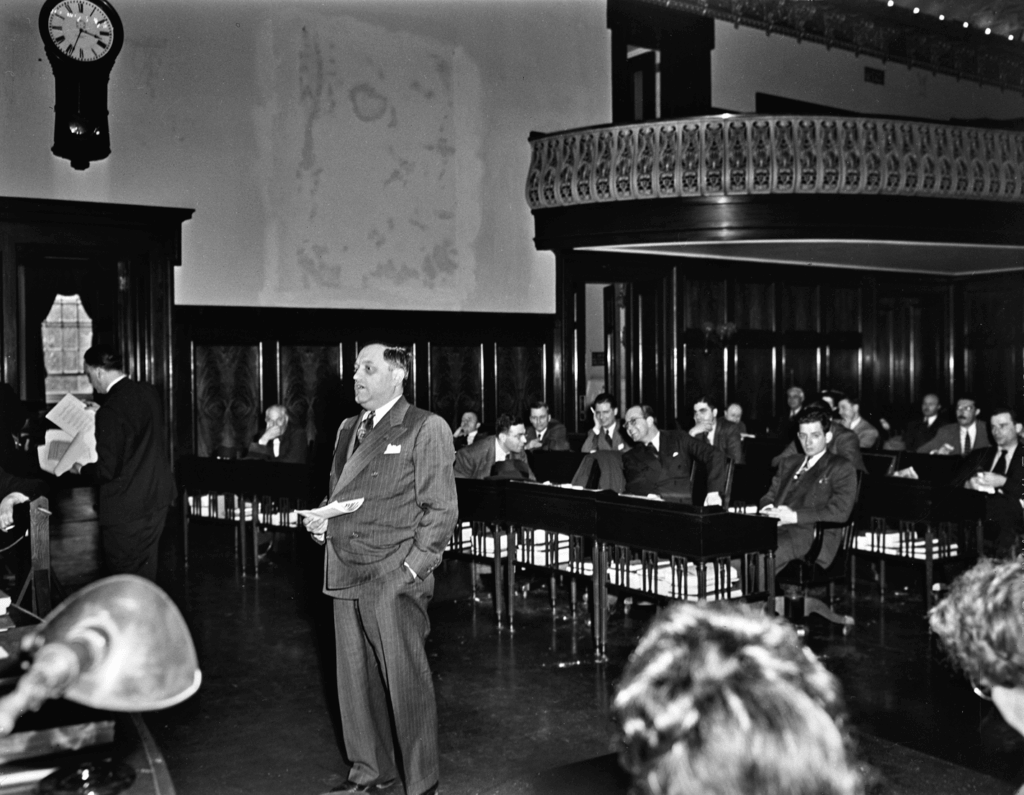
As I suggested in the published essay,
In his rhetorical stances, Cacchione was closely attuned to the idea that democratic politics had to be organized in democratic ways, advocating for a grassroots approach to political life very different from the reality of centralism within the Party itself. In addition to posters, rallies, and mass outdoor meetings, Cacchione advocated for holding “meetings in small groups” as a key organizing strategy. In a long memorandum prepared for colleagues in the Communist Party, Cacchione suggested that such gatherings were key to his 1939 victory. That year, he had spoken at forty-one such meetings, each attended by fifty to sixty people; sixteen of these were organized by housewives, pulled together by “comrades” who were in the PTA and opened their homes to host the meetings. “There is a psychological effect in a group of 25 or 30 housewives getting together and meeting a candidate,” he wrote. Cacchione outlined a distinctive approach to political speaking and organizing, one that saw the political interchange as a moment to embody democratic ideals. At the heart of this version of electoral radicalism was a deep interest in the project of building a mass movement through electoral means. “Never forget we are a party of socialism,” read one 1939 guide to public speaking. “Tell our ultimate aim openly and frankly.” He encouraged speakers to use simple words, avoid stock quotations, and take care not to go on too long. Most of all, they should “look upon audience as living people” who were deserving of respect.
During his time as an elected official, Cacchione helped to promote working-class causes such as union rights, cheap transit, and rent regulation and to push against racism, discrimination, and anti-Semitism. He supported the extension of the system of “nurseries” and child care that the city had adopted to enable women to work during the war years into the postwar period. And he regularly promoted electoral politics and deepening civic engagement in the public life of the city.

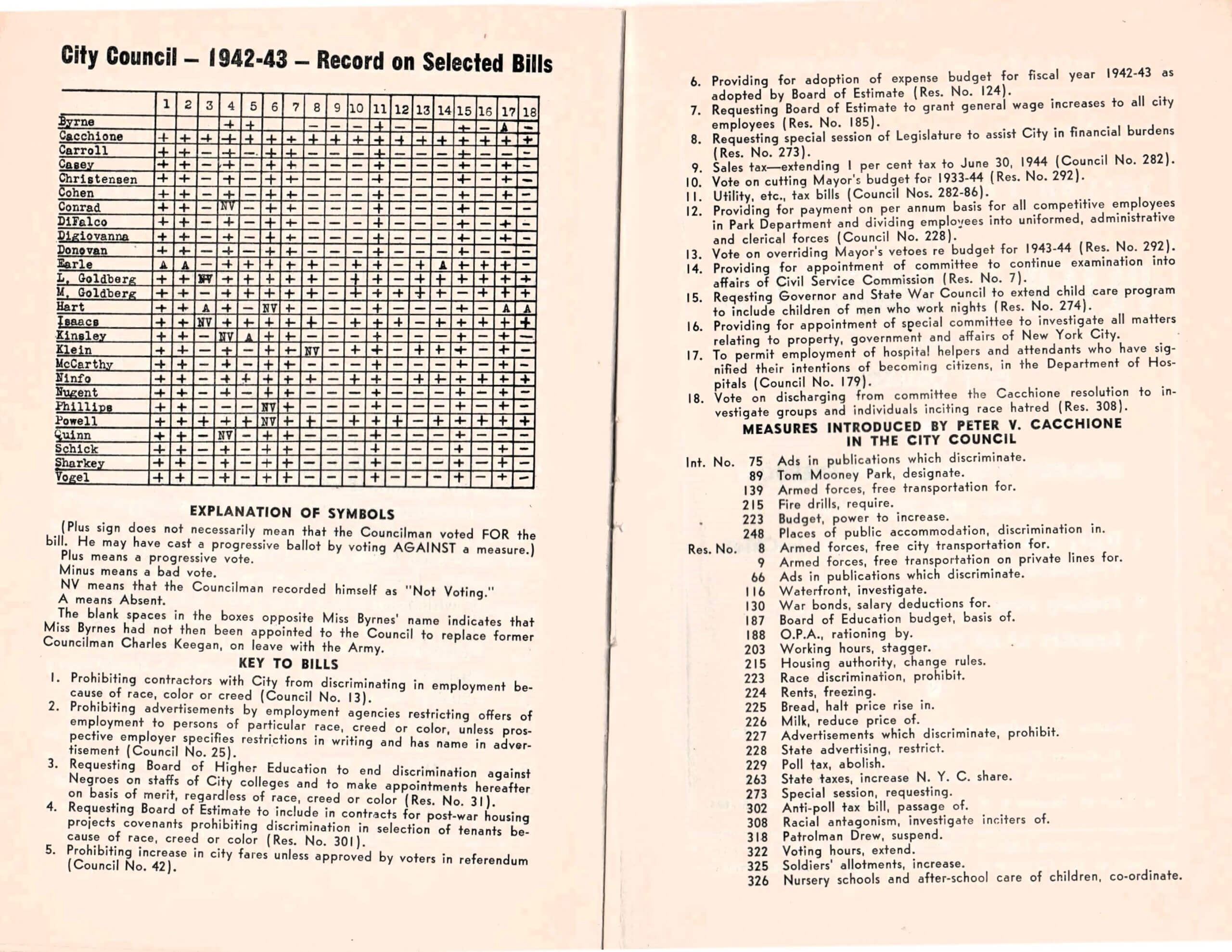
Here is an example of some of Cacchione’s promotion of his record on municipal legislation, from a 1943 re-election pamphlet. Then entire pamphlet is available below.
As this excerpt below from my essay shows, the effort to use municipal politics to build a richer democratic culture is also seen in the Cacchione political style.
Cacchione saw the social infrastructure of the city as connected to its democratic life. Building the public sector facilitated the exercise of democratic rights, and mass democratic movements were integral to the electoral politics that would make it possible to grow the public sector. In one communication with campaign workers in 1944, he pointed out the many people that any one person might come into contact with in the daily business of city life—“the grocery store man, the dairy store, the vegetable man, the bakery, the druggist, the barber, the beauty parlor, newspaper dealer, the ice cream store, the milk man,” and on and on, the social fabric of the city forming a dense network of relationships that could be brought into political life. Cacchione’s campaign materials emphasized the close ties between public institutions and democratic urban culture, but they were especially clearly reflected in a campaign over the use of community rooms in public housing projects. In 1947, several political groups (some but not all of which were Communist-affiliated) appealed to Cacchione that they had been denied space in housing projects where they wanted to hold meetings. Cacchione responded with an indignant letter to the New York City Housing Authority (NYCHA): “Housing projects under City Housing Authority jurisdiction are not private property. They are public property, built and paid for by funds from the people. You are denying, in effect, basic rights of assembly to citizens, in community halls which were erected from the funds to which they have also contributed.”
Tammany Democrats bitterly resented proportional representation, and the growing anti-communist fervor of the postwar years provided them with a window of opportunity to campaign against it. Despite an active base of supporters, the city voted to end PR in 1947. Cacchione died of a heart attack only two days afterwards. The Communist Party was not permitted to fill the seat with a replacement, a sign of increasing hostility to the left in postwar New York. (Davis would be convicted under the Smith Act, expelled from the City Council, and sent to prison in 1949.)
Still, Cacchione’s political vision lived on. Cacchione’s distinctive approach to the city’s economic and political issues helped to create the pressure from below for the reforms of the La Guardia years, creating the conditions that made possible the unusually extensive and ambitious city government of the postwar years. His campaign is instructive for people thinking about the relationship between radical politics and electoral strategy today.
Below is the full pamphlet from Cacchione’s 1943 re-election campaign, referenced above. Credit: Simon W. Gerson, Pete Cacchione — his record (New York: Workers Library Publishers, 1943) from Internet Archive.