LaborOnline LAWCHA Teaching Blog

New Essay published to Teaching Labor’s Story: Free Labor and Slavery, 1800-1830, by Sean Griffin

Check out Sean Griffin’s thematic essay for Teaching Labor’s Stry, “Free Labor and Slavery, 1800-1830.” Griffin’s essay is adding to our listing of broad overview essays for specific eras.
 
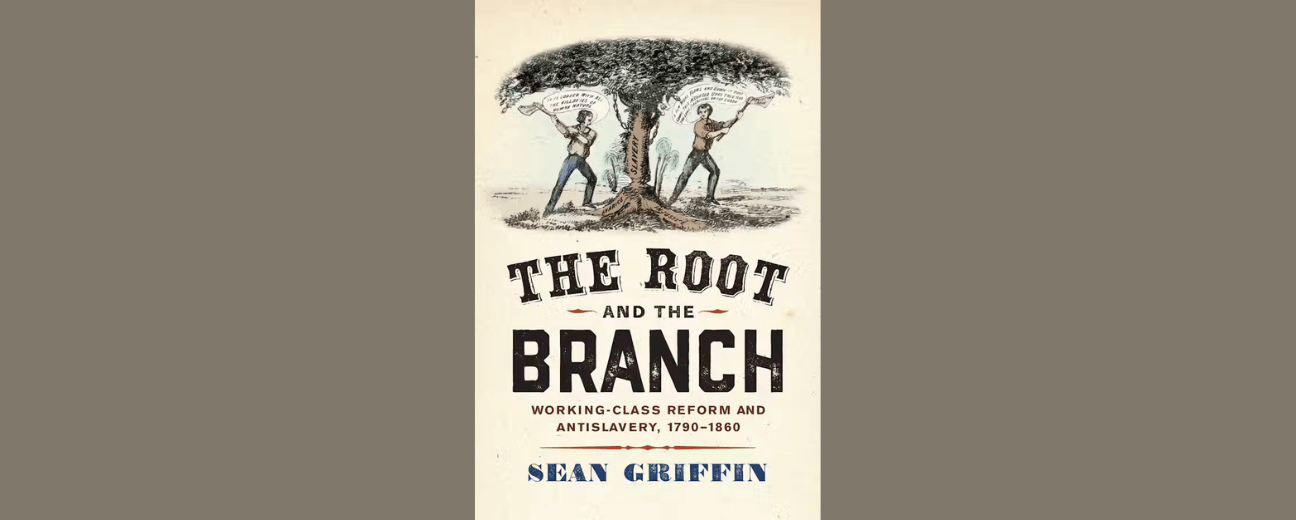
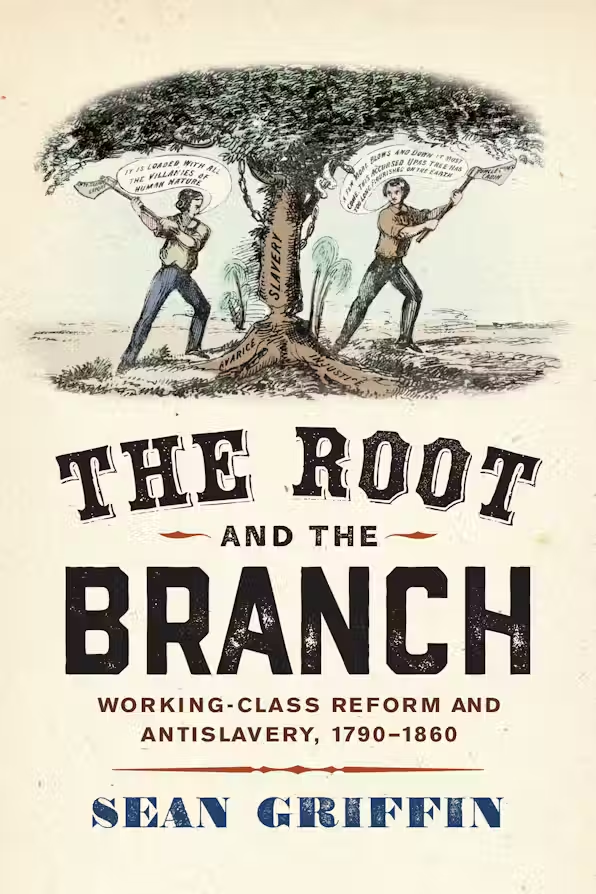
Griffin’s essay draws on his first book, The Root and the Branch: Working Class Reform and Antislavery, 1790-1860. Griffin recasts his deep understanding of this complex history to reveal the labor-based through-line connecting developments that are often treated as disparate events in mainstream American narratives.
 
As Griffin writes:
 
Between 1800-1830, two systems of labor expanded together: enslaved labor in the South and wage labor in the North. Southern states became increasingly dependent on slavery. Northern states gradually emancipated the enslaved, and increasingly relied on wage labor. Many called this “free labor,” but the exact meaning of the term was not clear. Workers’ responses to these developments played a pivotal role in shaping the contested meaning of “free labor,” as well as driving the conflict that led to the Civil War, and helping to define the issues that would continue to be debated in the post-Civil War economy and society of the United States.
 
In Griffin’s telling, we see the contested meaning of free labor play out in early labor organization and actions, in communitarianism, in the rise of Workingmen’s Parties, and more.
Sean Griffin, The Root and the Branch (University of Pennsylvania Press, 2024)

Sean Griffin  is a historian of Early America with research interests in transatlantic slavery and antislavery, radical social and political movements, capitalism, urbanism, and intellectual and political history.  He received his Ph.D. from the City University of New York Graduate Center. He has taught history at several New York City area colleges and has received several prestigious awards, including postdoctoral fellowships from the Massachusetts Historical Society, the National Endowment for the Humanities, the Library Company of Philadelphia, and the American Antiquarian Society. In addition to his work as a scholar and teacher, Sean has contributed to museum exhibitions and projects at the Center for Brooklyn History, the New-York Historical Society, and other public history institutions.  LaborOnline interviewed Sean about The Root and the Branch: Working-Class Reform and Antislavery, 1790–1860, in 2025.

TLS thematic essays provide historical context for primary source-based entries in the Teaching Labor’s Story collection. Thematic essays help educators make essential connections between mainstream narratives, with which they are familiar, and labor and working-class history, with which they may not be familiar.
 
 
Do you have a favorite primary source that can elucidate themes in Griffin’s essay?  Contact us!
New TLS primary source entries are always needed, especially for the pre-Civil War eras; all are eligible for a TLS Primary Source Award!     See the Call for Contributions

Author

  • Nikki Mandell

    Nikki Mandell is Professor Emerita at University of Wisconsin-Whitewater. She is the author of The Corporation as Family: The Gendering of Corporate Welfare, 1890-1930 (2003) and co-author of Thinking Like a Historian: Rethinking History Instruction (2008) and project director of many teaching and public history initiatives, including Teaching Labor's Story for LAWCHA

Nikki Mandell
Nikki Mandell is Professor Emerita at University of Wisconsin-Whitewater. She is the author of The Corporation as Family: The Gendering of Corporate Welfare, 1890-1930 (2003) and co-author of Thinking Like a Historian: Rethinking History Instruction (2008) and project director of many teaching and public history initiatives, including Teaching Labor's Story for LAWCHA