The Moving Past, a website and project that features century-old archival films on a wide array of Canadian subjects, has a few new films that will be of interest to those interested in labor history. I wrote about this project last year for Labor Online, and am happy to update our efforts.
The early Canadian film industry was distinct from that of the United States. Serving a much smaller market than that of the US, Canadian film producers in the private sector found it hard to survive. In Canada, two government-sponsored film bureaus were created and played an important role in producing domestic films, beginning in the First World War. Initially contracting with private companies like Pathescope, these Canadian-made films were vocational, focusing on the education and instruction of their audience. By the early 1920s, thousands of films were made, providing guidance on subjects like better farming techniques and celebrating industrial innovation in auto assembly, electrification, mining and fisheries. One Toronto newspaper declared these productions “are of a purely educational character yet are fascinatingly beneficial.”
In Canada, state involvement in film production and a robust censorship process sent a clear message that movies would serve as a tool for morality and education. Commercial films from the United States were judged to be ‘smutty’ by authorities in Canada. Many American churches and women’s organizations expressed strong concerns about the effect of movies and theatre houses on the American public and children especially. This led to a series of legal battles and public controversies about who determined the content of American film.
These films were also made in the wake of a labour revolt that occurred in 1919 across major cities in Canada and can be seen as instructing workers toward harmonious acceptance of their place. Several feature characters struggle with moral questions to illustrate proper values and behavior, often in a workplace setting. The films discuss gender roles, marriage, ambition, and hard work at a time when workplaces were changing rapidly. They contain both explicit and implicit messages which are fascinating examples of the state’s involvement in early mass media.
In 2024 The Moving Past was launched, making these films, which were previously inaccessible, available to stream online. The films can be watched free of charge, though donations are requested to support the project. There are now 21 films depicting various workplaces in Canada, from 1918 to 1930. Numerous films about miners, loggers, construction workers, fruit-farmers including young women called “farmerettes,” longshoremen, autoworkers, and others can be accessed for research and classroom use. In some of these productions the political intent is obvious. Conspicuously, unions and worker resistance are absent in these productions. Machinery and production are of the utmost importance.
The propaganda value of films like Life in a Mining Camp from 1921 or Her Own Fault, made in 1922, are useful to historians. A handful of films on The Moving Past site feature complex morality stories, featuring characters and stories about workplace safety, unemployment, and the education of rural children and women in manufacturing.
Occasionally films produced by the Ontario Motion Picture Bureau offered less then subtle lessons about employment and work being essential to ‘respectability’. The film Mailing Trouble, made in 1929, is structured as two parallel narratives. Both stories are built around a character named ‘Frank’, whose successful father, a businessman, recently died. A house is left to the family, but the inheritance is modest. Frank will still need to work.

At this point the film’s other message about masculinity appears. Frank addresses his job application incorrectly and misses an employment opportunity. He soon learns that being unemployed is affecting his engagement to his fiancé. She is less interested in him. While the obvious message of the film is about properly addressing letters and parcels so the postal service can function, there is a deeper lesson about masculinity. Frank loses out on a potential position and finds himself out of work. Next his fiancé is ignoring him and dancing with another man when they attend an event. In the end Frank secures a good position with a company that is owned by his fiancé’s father. This is another statement about class and money and marriage as an economic transaction. Mailing Trouble leaves the viewer with two messages. Addressing one’s mail properly was important, but the more powerful moral of the film is that a man needs a job if he hopes to keep his girl.
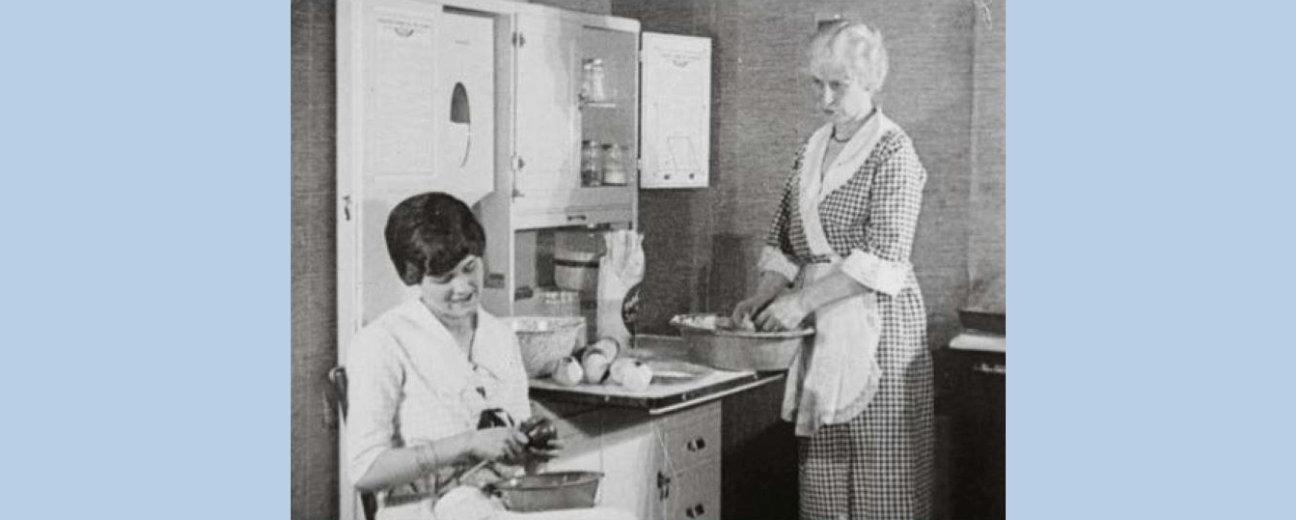
Another film, What’s in a Name?, is also about work, but approaches the subject very differently. Made in 1919, the film opens with two women sitting in kitchen discussing the “drudgery of baking”. One of them wishes it was affordable to hire someone do their baking for them. But it is far too expensive given their resources, says another. The other suggests that ‘modern housewives’ purchase their biscuits from a manufacturer to save their labour time. The scene then shifts to a large, highly mechanized bakery, located in Toronto, that was one of the largest in the world. For the remainder of the film, likely sponsored by the Christie Biscuit Company, we tour the various departments of the facility and meet many of the long-standing, dedicated, skilled employees who work there. The film continually emphasizes the commitment and expertise of the workers who make reliable and delicious biscuits, cakes, and other desserts, an assurance to the viewer who might have doubts about buying factory-made food. The film stresses that any of the products bought from Christie’s Biscuits were of the highest quality and completely safe. This message would have been important, as the safety of food products before the era of state-imposed safety standards could be questionable. Towards the end of the film, serving and presentation standards are shown with the products placed on tables in various arrangements. Made just after World War I, What’s in a Name? presents a remarkably early pitch to housewives about purchasing manufactured food at a time when most lacked the disposable income to make this more expensive choice and would have baked from scratch.
Both films are examples of how state-sponsored motion-pictures sought to shape perceptions of work and lifestyle, coaxing men and women into views that became dominant later in the twentieth century. The state-supported films were viewed by millions before the bureaus disappeared. Both film bureaus took steps to ensure their films were widely screened, going beyond commercial film theatres to select their productions for screenings. The productions of the Canadian Motion Picture Bureau were exported to the tourist bureaus of dozens of countries, as this industry was beginning to evolve. These Canadian films were also presented at conferences of scientists, teachers and salesmen. For example, Canadian films shown at the 1926 auto show in New York City brought inquiries from more than 200,000 potential tourists. In 1936 there were still nearly three thousand movie titles from the bureaus circulating in the United States alone.
The Ontario Motion Picture Bureau developed an extensive domestic film lending infrastructure that allowed any school, church, women’s institute or community club to borrow a projector and select films for a predetermined period, not unlike a library book. In fact, education experts in the province suggested at the time that film might replace textbooks as the basis of classroom instruction. The 28mm gauge film on which the motion picture bureaus films were made were more robust than other formats at the time and made operation of the projector simpler. These carefully-crafted Canadian government films choose the goal of education over any commercial purpose.
Ontario was the first jurisdiction in the world to form a government-sponsored motion picture bureau, in 1917. Canada created a national motion picture bureau the following year, initially called the Exhibit and Publicity Bureau, until it was renamed the Canadian Government Motion Picture Bureau in 1923. Both bureaus operated for nearly two decades, producing more than a thousand films, whose main purpose was instruction and education. These film bureaus took subtle and not-so-subtle approaches to mass culture, seeking to be a positive influence on viewers and avoiding what was perceived as the inappropriate content of American productions. In Ontario, Canada’s most populous province, films were carefully screened and often revised before they were shown on the screen. Many American films were deemed unsuitable for screening in that province. Formed in 1911, the Ontario Film Censor Board maintained a watchful eye on what the province’s public could see. For example, in 1930 the censor board insisted on changes or outright rejected more than a quarter the American films imported into the province. A Canadian survey of film content in 1931 found that only 17 percent of the nearly 200 features being screened in the United States were suitable for children. In the United States, the film industry self-monitored and experienced no strict film content standards until the “Hays Code” was implemented in 1934. Canada’s film industry was subject to review since the earliest days of film production. However, the censor board was not the government’s only influence on the content of Canadian film.
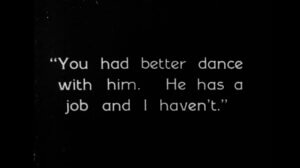
Canadian government-sponsored films were carefully constructed. The bureaus produced silent films using intertitles to communicate details and dialogue until the early 1930s. An invaluable collection of hundreds of instructional films, made between 1917 and 1936 have been preserved, but only a small proportion have been transferred from the film and digitized. The Ontario and Canadian Motion picture bureaus sought to make wholesome and educational productions. Some of these presented the natural beauty of the country to lure tourists. Other themes included the growth of industry and resource extraction, and proper behavior and values as sanctioned by the government. The Moving Past website seeks to make these sources available.
While American film glamorized flouting the law, Canadian productions provided guidance on following it, depicting proper behavior though stories designed to entertain audiences. The Ontario Film Censor Board observed that many American films “offer constructive suggestions to break the law” and “tend to create the impression that such conditions are normal.” In contrast, criminality was not shown in Canadian productions. Firearms were absent from the film screens of Ontario and Canada in general. The censor board further observed that “carrying of a firearm is an offence,” an early expression of differing attitudes towards guns which continues today.
The Canadian Government Motion Picture Bureau used film to help build national pride. Reviewing the industry’s progress in 1918, the Globe noted that the national film bureau was making a “major effort to record the great resources of the land, the forests, the mines and the sea for the purpose of bringing home to the public the great advantage of being a Canadian.” Americans were also a key component of this audience. Tens of thousands of tourists from the United States vacationed in Canada because of what they saw in these government-made films. These century-old travelogue films often focussed on the unspoiled lakes and mountains, which came to represent Canada, and Ontario specifically. The film industry helped forge a Canadian identity that American tourists and those from elsewhere would find alluring.
While both bureaus produced travelogues, they were also interested in depicting industrial work. Worker’s behaviour was a focus of some of the Ontario Motion Picture Bureau (OMPB) productions. With a mandate to educate “farmers, school children, factory workers and other classes”, the films often show workers tending machines with dedication, suggesting that smooth production must proceed no matter what.