The big questions for labor historians interested in public history are: what for? And who for?
What for: to help build a real labor movement in the US.
Who for: workers, so they will get energy and learn strategies from our history, rather than labor historians simply talking to each other in isolation.
The Maryland250 Labor History Project aims to capture and direct enthusiasm for history provoked by the national 250th Anniversary celebration. Its website hosts resources that restores, as Donald Trump blatted, “truth and sanity to American history by revitalizing key cultural institutions”—in this instance, the union movement and workers’ lives.
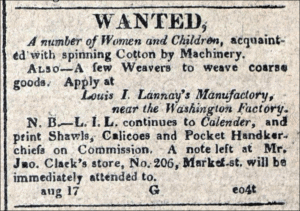
This crowd-sourced public history project draws on the local expertise embedded in working-class communities across Maryland and creates an easily accessible digital tool for anyone, including teachers, labor educators, and the public, who would like to know more about the state’s rich labor history, from early indentured workers to steelworkers at Sparrows Point.
All areas of Maryland have exciting labor history, but the narratives are often scattered and separate, so the MD250 Project will bring all of them into one place.
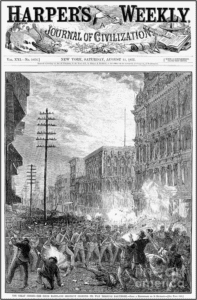
The project webpage features a Maryland labor history sitemap, with buttons for historical events in various geographic locations, so a person can click to access documents, museum websites, videos, and narratives. The site will be updated as we accumulate more material.
The project will include all varieties of historical material–documents, videos, artifacts and oral histories. Our goal is to make available workers’ history that will reach many people (not just in Maryland) and will be sourced from many people.
As an example, we have started creating podcasts so workers can share their histories.
Other goals of the project include:
- Activities—historical walking tours and programs at important locations, and conferences, presentations and celebrations.
- Developing partnerships—with unions, with local history associations, with the MD Department of Labor, the MD and Baltimore City Archives, the MD Center for History and Culture, the Baltimore Museum of Industry, etc.
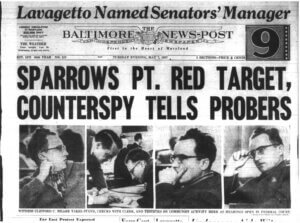
- Working with the Baltimore City Historical Society, and there will be two programs on workers’ history—in April, Smash the Color Line: Interracial Working-Class Solidarity in 19th and 20th Century Maryland, and in May, The Red Scare in 1950s Baltimore, which will focus on House Un-American Activities Committee hearings at the Sparrows Point steel mill.
- Creating travelling exhibits that can be set up at community centers, union halls or museums across the state.
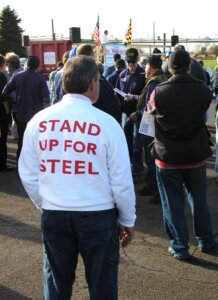
Bridging all of these goals, the project also seeks to create new “historians” by encouraging participation from workers themselves, so the project is not limited to professional historians. Every worker is an historian, with experiences on the job and in their communities, and the Labor History Project will encourage the collecting and recording of their experiences. High school history teachers will be encouraged to participate with their students in creating projects.
As another way to expand the importance of labor history, we created in Maryland two $250 prizes for Labor History Projects at Maryland History Day. The awards go to senior high school and middle school participants at the state History Day in May.
Projects at the state contest in 2025 included The Radium Girls, The Bread and Roses Strike, the Match Girl Strike, Safety on The Railroad, The Triangle Shirtwaist Fire, Child Labor in the 1900s, Curt Flood and the fight for Free Agency, Cesar Chavez, The Lowell Girls strike of 1836, Workers Rights During the Great Depression, The Era of McCarthyism, the photographs of Lewis Hine and two large projects, Labor Rights and Our Responsibility to Uphold Them, and The Weight of Labor.
I only wish we could have given a prize to each of them, but it is encouraging to see the students, and their teachers, looking at our history. Most importantly, these prizes are crowd-sourced, to encourage workers across the state to participate (and to make sure the money is available!).
We have tried, without much success, to encourage union activists and labor historians in other states to create similar projects, leaving us with the What For question unanswered.