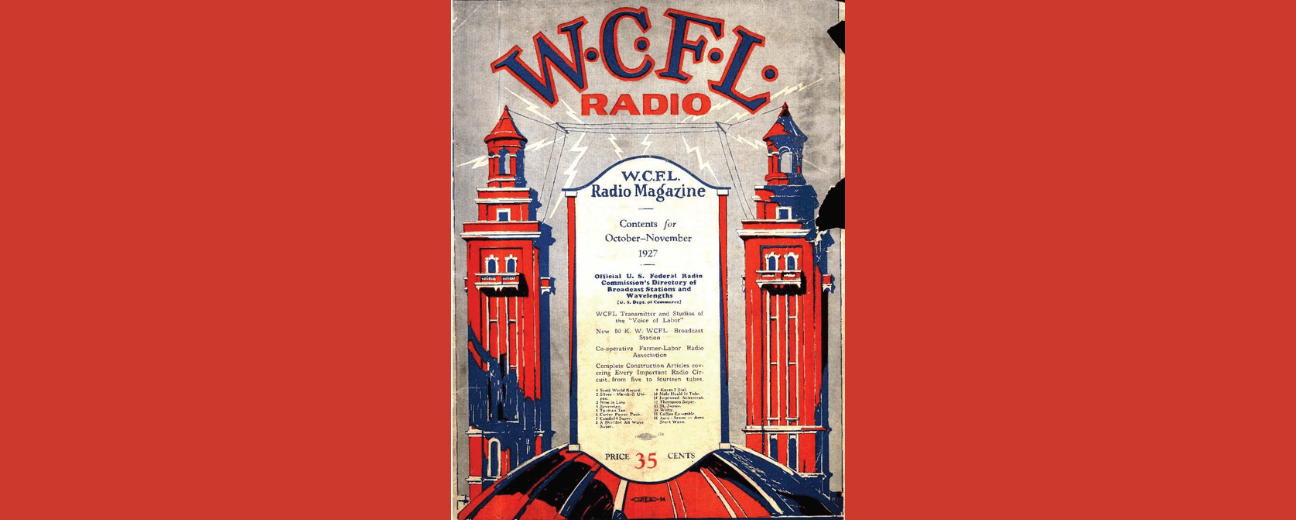
Robert Reich, among other critics, has warned that today’s media ecosystem is far more susceptible to authoritarianism than in the past. He blames this situation on structural changes to the political economy such as media and wealth concentration and shareholder capitalism. This is a valid observation, although it overlooks the disastrous role that neoliberalism played in the process. Criticisms of media concentration, authoritarianism, and threats to free speech, however, are not new. For over a century, a major problem with American mass media has been the tendency toward consolidation and monopoly and restrictions on free speech. Numerous groups in the past understood this and tried to do something about it—especially organized labor. In this regard, it is important to acknowledge the birth, one hundred years ago this month, of an oppositional and alternative form of radio: Chicago’s WCFL.
WCFL emerged in the mid-1920s when radio broadcasting first became a popular mass medium. Contemporary pundits believed that radio could enhance democracy, obliterate class differences, and spread education and culture. Trade unionists and political radicals, however, recognized that an emerging monopoly of corporate radio stations and networks threatened working-class interests. Chicago labor officials attacked network radio programming for manipulating the myths of consensus and individualism while promoting consumerism, the sacred marketplace, and business infallibility. Socialist Party head Norman Thomas feared that commercial radio would anesthetize the American people and make them more vulnerable to conformity and mediocrity. Such criticisms, of course, had a long history.
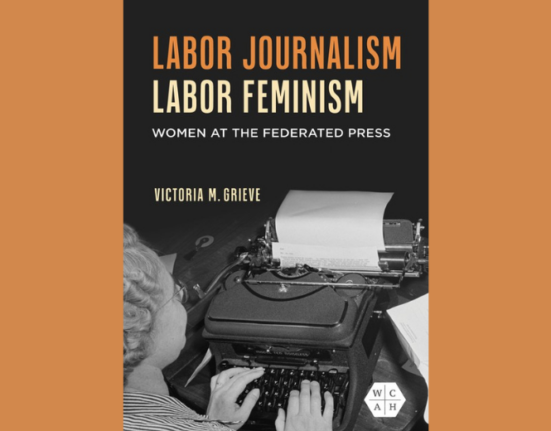
Dispossessed and oppressed communities—whether defined by class, race, or gender—and individual dissidents had long recognized the tendency of capitalist media to distort, stereotype, and malign their values and lives. Workers, African Americans, ethnic enclaves, and women’s groups understood the need to develop their own oppositional voice, to control their own sources of information and education for their respective and often overlapping communities. In the early part of the nineteenth century, U.S. laborers and socialists perceived that mainstream newspapers echoed the class interests of local merchants or nascent industrial capitalists. A classic study of the industrial revolution in Lynn, Massachusetts noted the emergence of a labor press that denounced concentrated wealth, “defended the ballot as a weapon of reform,” entertained “with moralistic fiction,” and informed readers about industrial and union developments.[1] Later in the century, immigrant working-class communities produced a labor press that regularly addressed “the issues of class and ethnicity, of organization and work-place discrimination, of gender roles…, of class fragmentation and international solidarity.”[2] By the early twentieth century, a vibrant labor and union press had emerged, serving the working-class at large and the interests of trade unions in particular. In the 1920s, labor activists and radicals created the Federated Press (FP), modeled after the Associated Press, to cover national and international political and economic events from a working-class perspective. The FP offered an ideal home for radical journalists such as Jessie Lloyd O’Connor and Harvey O’Connor who “covered the news that the commercial press ignored and/or feared.” In the same era, the reporting and commentary of labor journalists such as Eva Valesh and Mary Heaton Vorse contended with a society rife with gender discrimination and class conflict.[3]
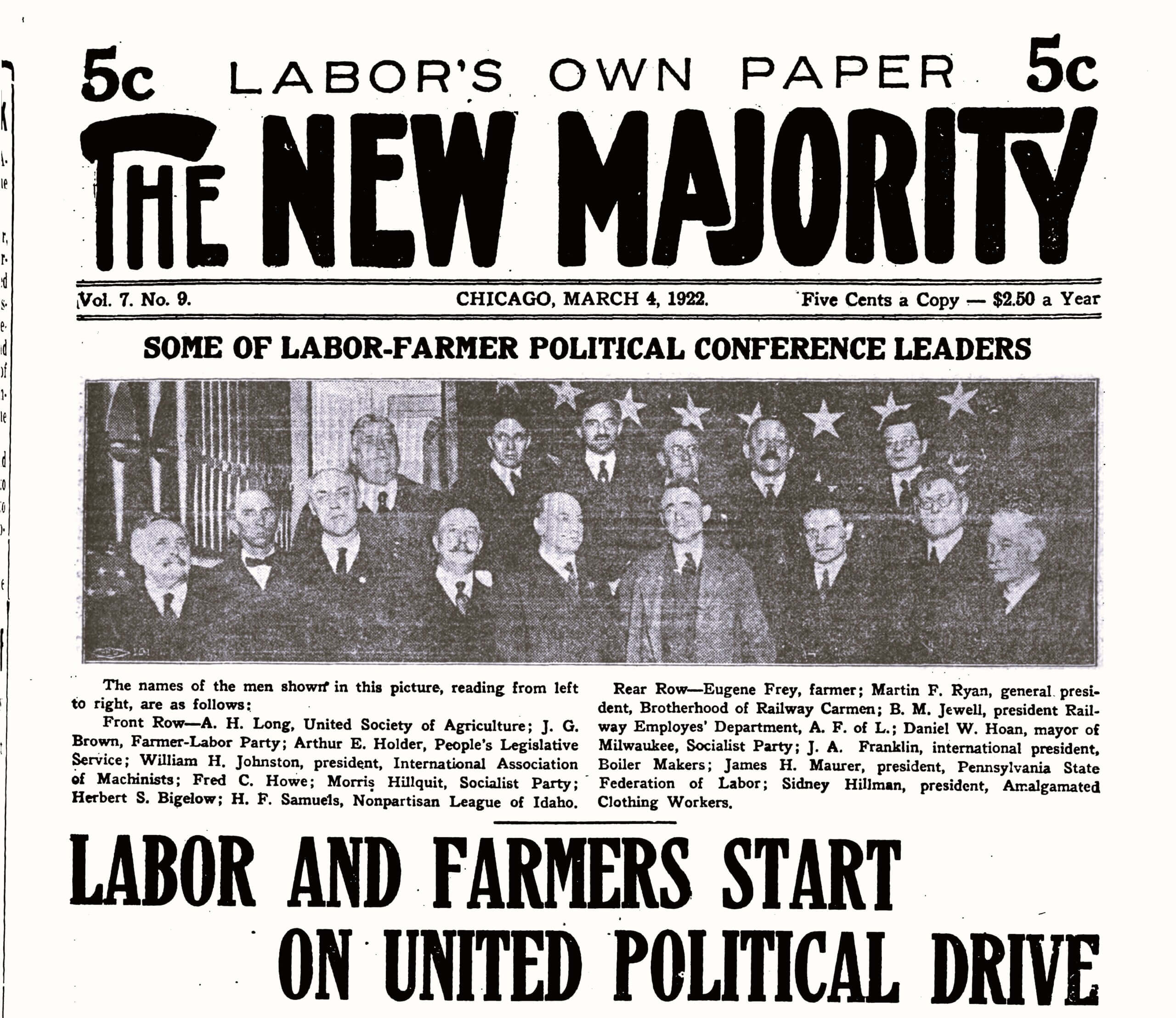
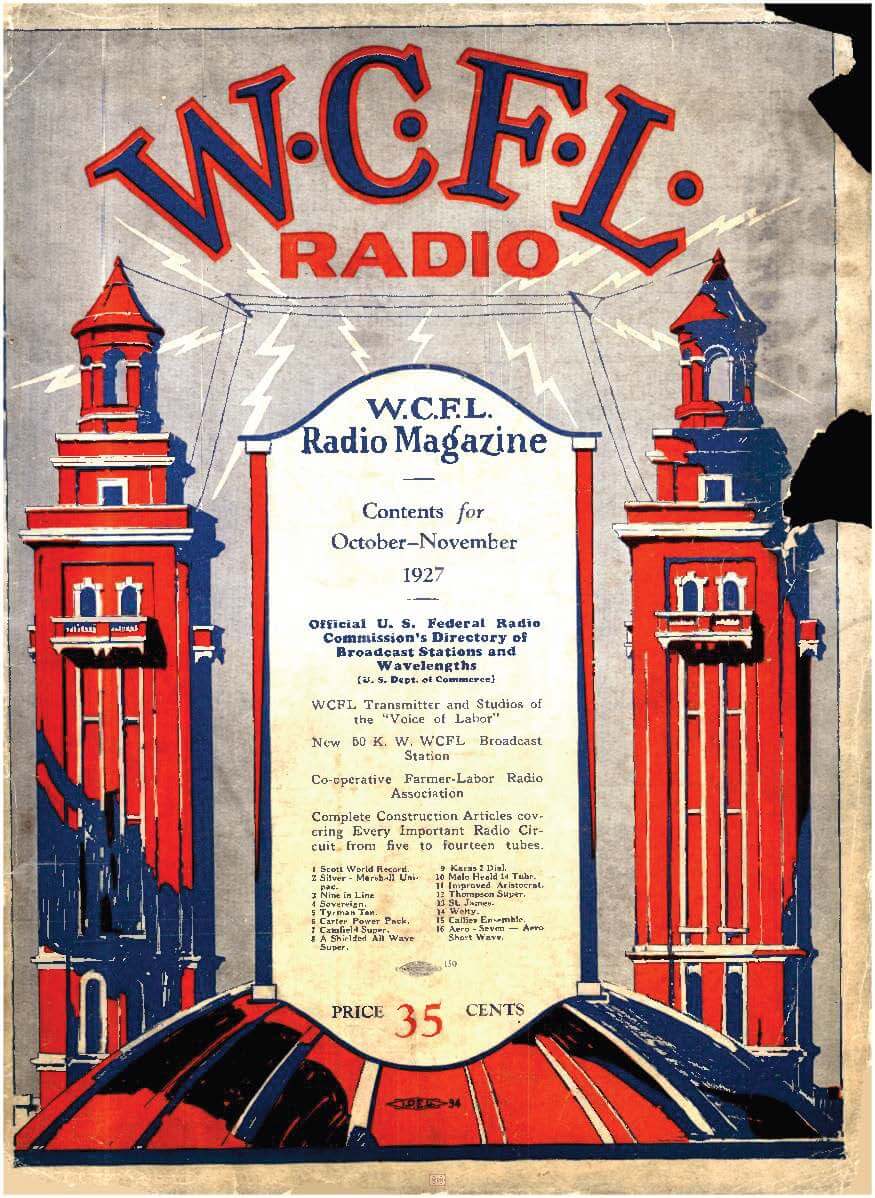
Leaders of the Chicago Federation of Labor (CFL) also waged war against capitalist concentration. In the first two decades of the twentieth century, John Fitzpatrick and Edward Nockels, the CFL president and secretary, respectively, developed reputations as “the most active, the most untiring, the most militant sponsors of organized labor.”[4] Moreover, these two organic intellectuals were in the vanguard of using cutting edge media to win the hearts and minds of Chicago’s masses. During World War I, Fitzpatrick and Nockels led the CFL to establish both a newspaper (the New Majority, later the Federation News) and press service (FP) dedicated to providing alternative and oppositional perspectives to that of the capitalist media. In July 1926, the CFL launched its own radio station, WCFL. Created in the midst of a national debate about the structure and nature of U.S. broadcasting, WCFL would, in its first decades, be a thorn in the side of network broadcasters (e.g., the National Broadcasting Company), concentrated media conglomerates (e.g., the press/radio empires of William Randolph Hearst and Robert R. McCormick), and federal regulatory agencies (e.g., the Federal Radio Commission and its successor, the Federal Communications Commission).
WCFL was the nation’s first and longest-surviving labor radio station. It began as a listener-supported channel rooted in local working-class and ethnic communities. It emphasized popular entertainment and labor and public affairs programming. Ed Nockels became the voice of labor’s driving force during its first and most militant decade (1926–1937). Under his direction, unions and working-class communities in the city used labor radio to help organize workers, increase public support for the union movement, and enhance working-class consciousness and culture. Equally important, Nockels became a prominent voice criticizing a growing radio monopoly of network broadcasters, large radio station owners, and electronic equipment producers. Dependent on voluntary contributions and the resources of its parent body, WCFL suffered financial crises—exacerbated by the Great Depression—and continual harassment by federal authorities and corporate competitors. Nevertheless, WCFL served a broadly defined labor and progressive community. “Service,” for Nockels, meant providing “not only entertainment but information; not only music but science, history, economics, and all the other things that make for human welfare.” A variety of labor, civic, consumer, and political activists and organizations utilized WCFL’s microphones well into the 1940s.[5]
Labor and radical groups joined WCFL to denounce corporate radio’s institutional structure and contest its adverse cultural and ideological influence on the masses. And, to some extent, Chicago’s voice of labor served as a model for other labor/community-based outlets. Labor councils in San Francisco and St. Louis, the American Fund for Public Service, and other groups considered creating their own radio stations during the 1920s. The Socialist Party established a radio station in New York City in 1927. Named after Eugene V. Debs, WEVD dedicated itself to becoming “a fighting, militant champion of the rights of the oppressed.” Initially supported by financial contributions from party organs as well as the garment trades unions, WEVD became linked with the Jewish Daily Forward and the conservative wing of the socialist movement. Well into the 1930s, area trade unions used the station’s facilities to educate and organize workers. The International Ladies’ Garment Workers’ Union (ILGWU), for example, produced programs that combined live entertainment with speeches by prominent labor and political leaders. WEVD also broadcasted a variety of progressive and radical political analyses and shortened versions of workers’ theater productions. By the 1940s and 1950s, WEVD’s labor orientation had yielded to “ethnic” programming, especially Yiddish entertainment and commentary on American Jewish life and the state of Israel. Although the station never entirely abandoned its social democratic tradition, it became increasingly right-wing by the 1960s. It left the air in 2001.[6]
A revived labor movement in the 1930s saw many labor and political activists hoping to use the mass media to challenge corporate capitalism’s ideological and cultural institutions and products. Unions affiliated with the Congress of Industrial Organizations (CIO) in the 1930s–1940s formulated their own programming on commercial stations and networks. These labor programs aimed at both counterbalancing pro-capitalist corporate propaganda and advancing labor’s own visions of industrial democracy, social justice, and equal rights. The work of radical labor radio commentators such as Arthur Gaeth and Sidney Roger, for example, offered oppositional perspective on domestic and foreign affairs in the mid- and late 1940s. At the same time—with the advent of an alternative broadcasting format, frequency modulation (FM)—several CIO unions created their own broadcasting stations. The ILGWU and the United Automobile Workers, in particular, established FM stations at this time. But these outlets proved short-lived because of the prohibitive cost of financing station operations and programming and the competitive disadvantages of FM broadcasting.[7]
Depression-era problems, commercial radio competition, grandiose plans for a radio network of labor stations, and pressure from the conservative American Federation of Labor, changed WCFL by the late 1930s and early 1940s. Under pressure from the AFL, for example, the CFL opposed creation of the CIO and refused to allow CIO locals to use WCFL’s facilities. Compounding the station’s difficulties was the death of Ed Nockels in 1937. WCFL increasingly became like other commercial operations: dependent on advertising and mass entertainment programming for its survival. In the 1950s and 1960s WCFL redefined its “service” to labor and maximized profits to fund its own operations and general CFL activities. WCFL developed a rock n’ roll format to attract a rapacious consumer audience and, consequently, big-spending advertisers. Successful for a short time, rock radio ultimately failed. The CFL sold the station’s license in 1978.
The presence of labor radio stations such as WCFL, especially during the early decades of broadcasting, represented an alternative to the concentrated business-owned mass media and acted as an oppositional force in U.S. politics and culture. Nockels’ twelve years of guiding WCFL were not perfect; they were full of inconsistencies and mistakes. WCFL’s increased commercialization, even under Nockels’ eye, weakened the participatory democracy that he and Fitzpatrick had championed in the 1920s. But Nockels was an articulate advocate for a decentralized and democratic media system. He denounced property rights on the air, maintaining that the airwaves were a public resource and as such should benefit all people and not become a source of profit for private or political interests. A century later we might ask how Nockels would have responded to the neoliberal policies, such as the Telecommunications Act of 1996, which had the effect of accelerating media concentration and weakening free speech rights. Nockels probably would have asked Congress, as he actually did in 1927: “what right has an individual or corporation to use and exploit public property for profit?”[8]
Nockels’ critique of a concentrated media system fit into his overall assessment of corporate capitalism. As twentieth-century “radical Jeffersonians,” Nockels and Fitzpatrick interpreted U.S. society as “one vast, virtuous majority that suffered injustice” at the hands of a narrow minority of corporate monopolists.[9] The danger was not only that a handful of corporations would establish a monopoly over communications technology, but that they would dominate the nation’s cultural and ideological production. Nockels would be aghast at the level of media concentration taking place in the United States today. Even in the 1920s, Nockels and Fitzpatrick urged the federal government to investigate a radio monopoly that poured millions of dollars into “wonderful music and entertainment” which corporate broadcasters used “to lull the people to sleep while, with their…perfumed silk gloves, they will be able to pick the pockets of the people for all time to come.”[10]
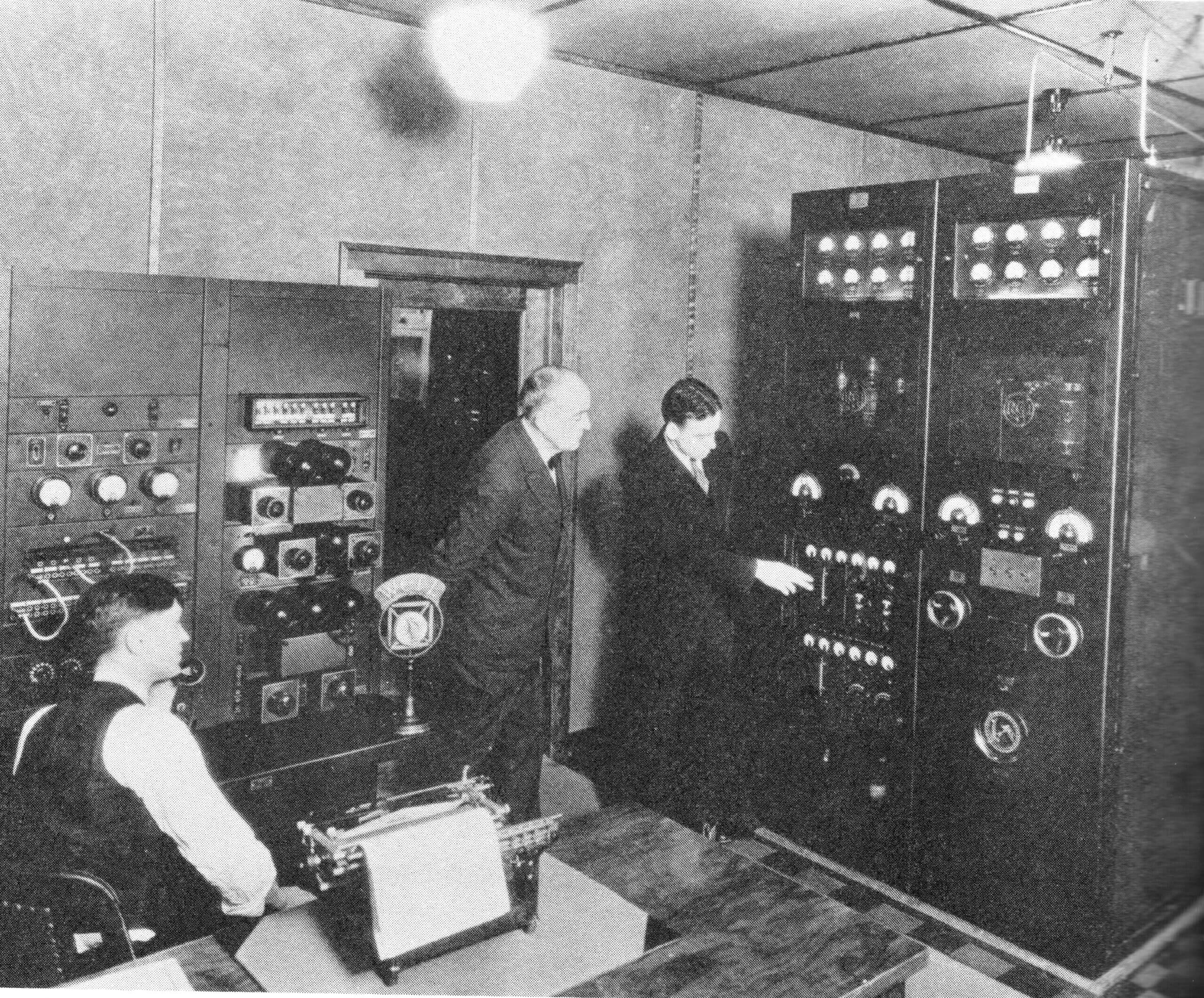
This leads us to a crucial and still relevant point raised by Ed Nockels and WCFL in the 1920s and 1930s: the right of free speech on the air. In his battle to establish and sustain WCFL, Nockels exposed the way in which corporate capitalism tried to define the terms of debate. A frequent nemesis of Nockels was Louis G. Caldwell, the first general counsel of the Federal Radio Commission (FRC) and prominent corporate attorney. While serving in government and/or defending the media empire of Robert R. McCormick, Caldwell structured the debate about radio free speech in such a way as to dismiss, out-of-hand, those who questioned the sanctity of the capitalist marketplace and its role as the sole guarantor of free speech. Challengers to such a proposition, such as Nockels and WCFL, became comparable to the feebleminded who attacked the law of gravity. Caldwell, network executives, FRC and FCC commissioners, etc. found Nockels insufferable because he disputed the meaning of words and actions that they held as self-evident truths. But Nockels revealed the fallacy of such an argument and exposed the efforts of corporate capitalists and their state henchmen to create ideological hegemony. He turned their arguments on their heads to demonstrate their class origin and intent. For this reason, if for no other, we should acknowledge and learn from Nockels’ role in creating WCFL a hundred years ago.
[1] Alan Dawley, Class and Community: The Industrial Revolution in Lynn (Cambridge: Harvard University Press, 1976), 191-92.
[2] Dirk Hoerder, editor, The Immigrant Labor Press in North America, 1840s-1970s: An Annotated Bibliography (Westport, CT: Greenwood Press, 1987), 31.
[3] Jessie Lloyd O’Connor, Harvey O’Connor, and Susan M. Bowler, Harvey and Jessie: A Couple of Radicals (Philadelphia: Temple University Press, 1988), 122.
[4] Letter, William B. Rubin to L. P. Straube, March 1, 1937, Correspondence 1937, Folder Jan.-Mar., Box 11, William B. Rubin Papers, Wisconsin Historical Society, Area Research Center, University of Wisconsin, Milwaukee.
[5] Nathan Godfried, WCFL: Chicago’s Voice of Labor, 1926–1978 (Urbana: University of Illinois Press, 1997).
[6] Nathan Godfried, “Struggling over Politics and Culture: Organized Labor and Radio Station WEVD during the 1930s,” Labor History 42: 4 (June 2001): 347–69.
[7] Elizabeth Fones-Wolf, Waves of Opposition: Labor and the Struggle for Democratic Radio. (Urbana: University of Illinois Press, 2006); Nathan Godfried, “‘Voice of the People’: Sidney Roger, the Labor/Left, and Broadcasting in San Francisco, 1945-1950,” American Communist History 18:1-2 (March-June 2019): 56-78.
[8] Federation News, April 9, 1927, 1.
[9] Steven Sapolsky, “Response to Sean Wilenz’s ‘Against Exceptionalism: Class Consciousness and the American Labor Movement: 1790-1920,’” International Labor and Working Class History, no. 27 (Spring 1985): 35-38.
[10] Federation News, March 24, 1928, 1-2.