Stephen Brier sent this exciting news:
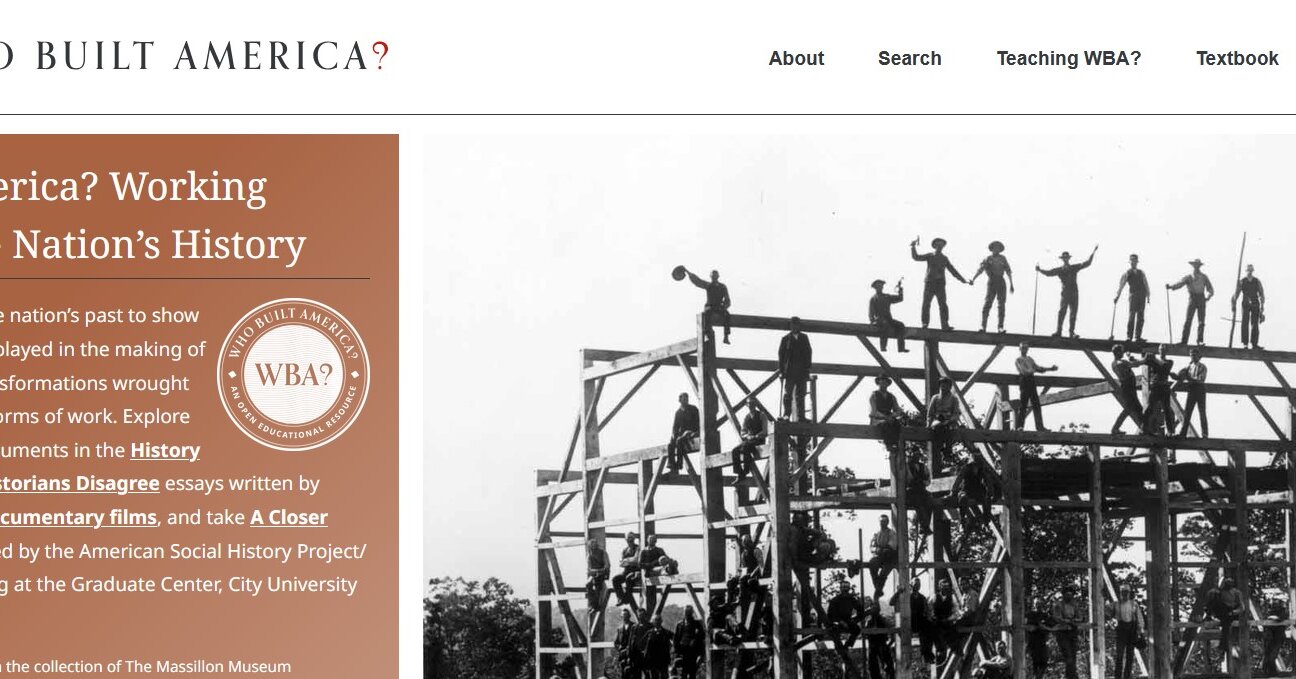
A new open educational resource edition of “Who Built America?” — the American Social History Project’s landmark textbook telling U.S. history “from below” — is now free and updated to the 2020s.
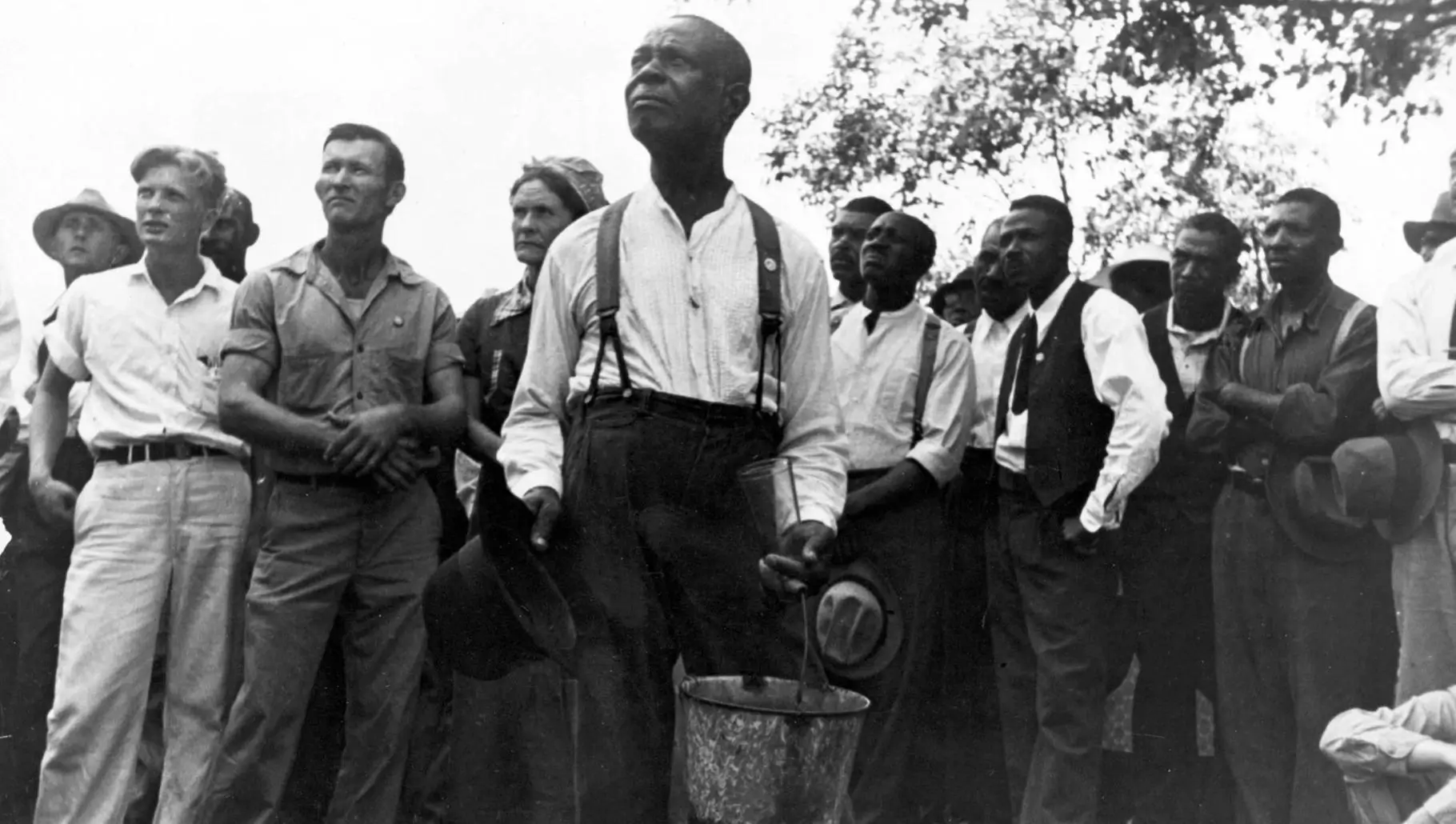
For more than three decades, Who Built America? Working People and the Nation’s History has helped students understand the country’s past through the lives of ordinary people. Now, the textbook that contributed to defining U.S. “history from below” is free, fully digital, and updated.
The new open educational resource (OER) edition, developed by the American Social History Project/Center for Media and Learning (ASHP/CML), a research center of the CUNY Graduate Center, is available to college instructors, advanced high school teachers, and the general public at no cost. The project was made possible by grants and support from the National Endowment for the Humanities, the Ford Foundation, Digital Scholar, and the CUNY Central Office of Library Services.
The new version expands what Who Built America? can offer in the classroom. Alongside the textbook, the site brings together primary sources, documentary films, and teaching essays that help instructors foreground a wide range of voices and experiences and connect recent U.S. history to the longer struggles over work, democracy, migration, and social change that have shaped the nation’s past.
The project contributes to CUNY’s initiative to expand open educational resources and zero textbook cost programs, which have lowered barriers to high-quality course materials across the university. “We’ve always wanted to get the Who Built America? text out to the public,” said Stephen Brier, one of the textbook’s co-authors and a professor emeritus at the Graduate Center. “Putting it online, free, completes a circle we started in 1989.”
The New Edition
The OER edition expands the textbook’s historical coverage to the 2020s, adding a new last chapter by Annelise Orleck, a coda essay by historian Paul Ortiz, and a slate of new scholarly essays. ASHP/CML staff also revised language and terminology throughout the text, adopting, wherever possible, terms that reflect how groups and communities identify themselves.
“The digital edition makes it easier for instructors to teach with Who Built America? in different ways and across the disciplines,” said Stefano Morello, ASHP/CML’s assistant director for digital projects and incoming director. “The textbook is at the center of the OER, and the surrounding essays, primary sources, and teaching materials allow faculty to build assignments and discussions around the questions that matter most for their courses.”
The new edition is the product of a broad collaborative effort that brought together ASHP/CML staff, CUNY scholars, and leading labor and social historians from institutions across the country. Spearheaded by Graduate Center Professor Emeritus Joshua Brown, Pennee Bender, and Peter Mabli in 2019, the project was later carried forward by Professor Anne Valk and Stefano Morello (Ph.D. ’25, English) through publication and into its next phase of development.
Four current and former Graduate Center History Ph.D. students — Evan Rothman, Naomi Fischer, Carli Snyder (Ph.D. ’25, History), and Chloe Stoia — also contributed new essays to the book, as part of ASHP/CML’s longstanding tradition of providing professional development and research opportunities to graduate students.
Teaching Materials
The online edition pairs the textbook with a set of teaching resources that instructors can use to deepen classroom discussion and build assignments. It features more than 40 A Closer Look essays and seven Historians Disagree essays. The former offer readers an in-depth investigation of a significant historical event, cultural phenomenon, or trend that is otherwise only touched upon in a chapter. The Historians Disagree essays introduce readers to historiography by tracing how scholars’ approaches to key topics have changed over time.
The OER also includes a searchable repository of more than 2,000 curated primary source documents, including oral history excerpts, legislative documents, visual artifacts, audio recordings, maps, and charts. About half of the documents in the repository were imported from History Matters, a legacy project developed in collaboration with the Roy Rosenzweig Center for History and New Media at George Mason University.
Instructors who have piloted the resource throughout its development have responded with particular enthusiasm to the volume of supplementary material ready for classroom use and to the project’s focus on working people. By placing working people, communities of color, women, and immigrants at the center of U.S. history, the text invites students to engage with the past through perspectives that are often marginalized.
“A lot of students had never encountered these voices, these folks, in U.S. history before,” said historian Elizabeth Shermer of Loyola University Chicago. “It’s been really exciting to see both their excitement and interest.”
A Long Arc
ASHP/CML was founded at CUNY in 1981 by Brier and fellow historian Herbert Gutman, both early architects of the social history approach that centered on the everyday experiences of working people. In 1990, the American Social History Project became an official CUNY research center; in 1996, it affiliated with the Graduate Center. The first print edition of Who Built America? appeared in 1989. A fuller account of the textbook’s evolution is available in Who Built America’s’ Digital Odyssey – A Documentary on Four Decades of Social History Teaching, directed by ASHP/CML Multimedia Specialist David Scheckel, embedded below.
Who Built America? Consultations for Educators
ASHP/CML is offering consultation hours for educators interested in adopting the OER for their courses. The sessions, led by Snyder, a historian and educator at ASHP/CML, walk instructors through the resource’s features, identify materials suited to specific syllabi, and answer questions about adapting the OER to different disciplines and levels. To schedule a session, fill out the consultation form.