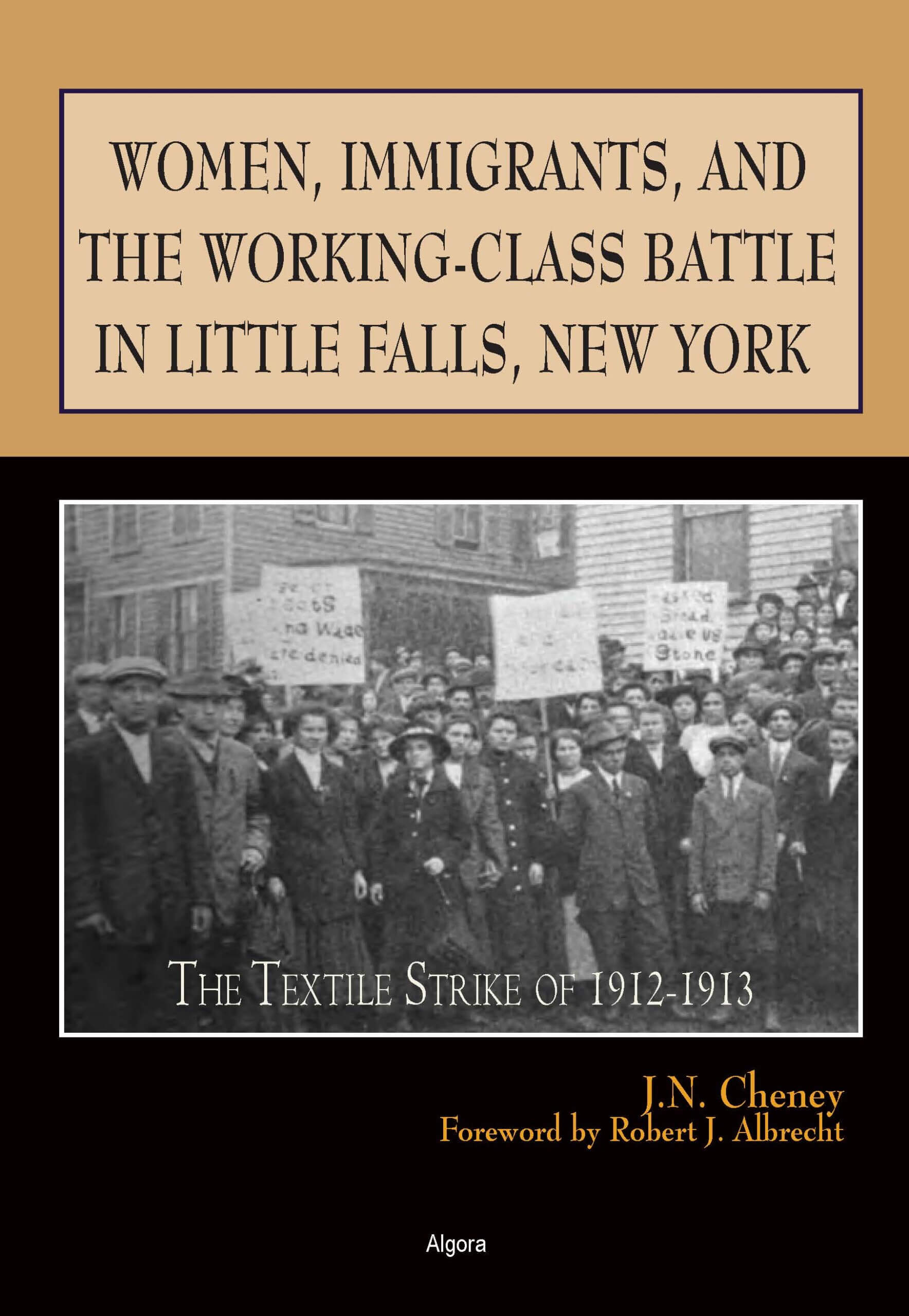
For more on the Little Falls strike, see J.N. Cheney’s new book, Women, Immigrants, and Working-Class Battle in Little Falls, New York: The Textile Strike of 1912-1913.
In October 1912, when textile workers in Little Falls, New York received their paychecks, they all found their pay had been cut, and they were angry. These workers were primarily immigrant women and children from Eastern and Southern Europe. To prevent incidents such as the Triangle Shirtwaist Factory Fire, State legislation had cut their hours from 60 hours a week to 54, but had not ensured that they would not have a pay cut when the hours were reduced. In response, they walked out. The walkout bloomed into a nearly three-month strike that introduced the city to the most extreme elements of class struggle. A struggle that conveys lessons of solidarity of an immigrant workforce, it is not nearly as celebrated as the 1912 Bread and Roses Strike or the 1913 Paterson Silk Strike. This essay seeks to properly remember the Little Falls textile strike.
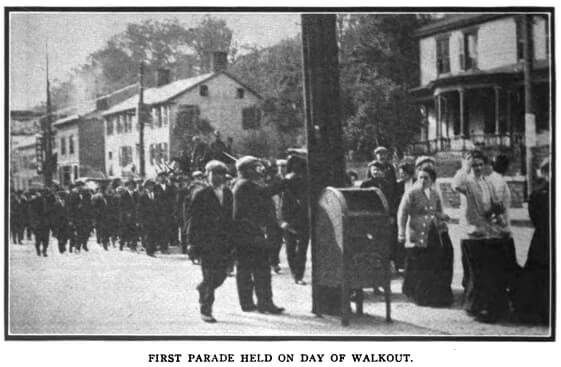
From its early stages the strike received support from major names in the US labor and socialist movements. Members of the Schenectady, New York branch of the Socialist Party journeyed to the city at the behest of George R. Lunn, Schenectady’s first and only socialist mayor. Lunn and his comrades delivered speeches outside of the mills that called for others to join in this struggle and for a broader, more widespread support. Local police responded by invoking a scantily enforced city ordinance that required a permit for outdoor gatherings of a certain size. Lunn and others from Schenectady were arrested, leaving a gap in the strike’s leadership. Their arrests were covered in the New York Times, which gave the strike national attention.
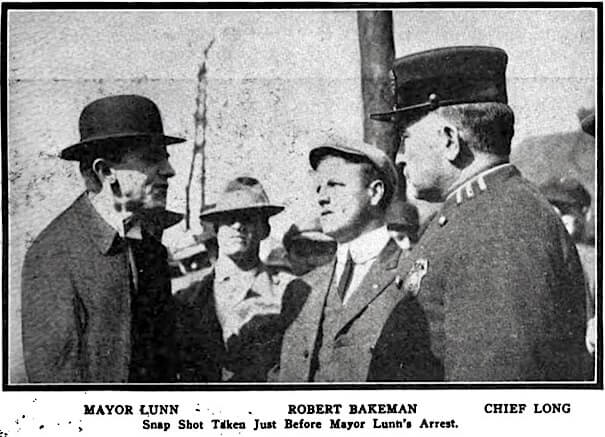
After the combination of Lunn’s arrest and his wider calls for support, organizers from the Industrial Workers of the World (IWW) stepped in to aid the textile workers in their struggle. Through their tutelage, the strikers formed a strike committee to handle the logistics of the picket line and formed a proper union – Local No. 801: The National Industrial Union of Textile Workers of Little Falls.
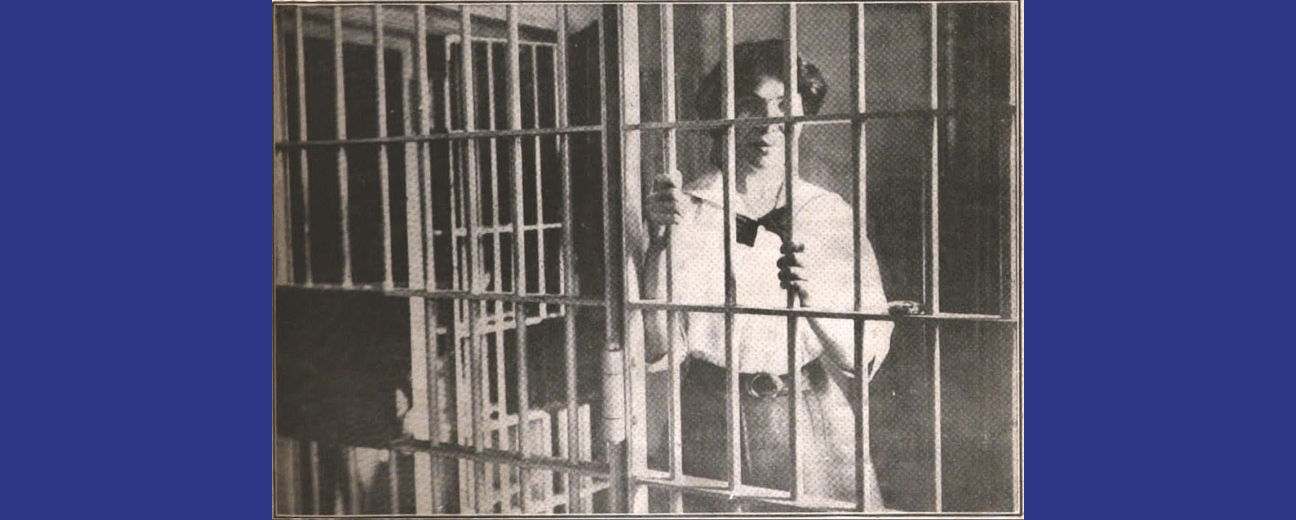
Helen Schloss, an immigrant and socialist herself, was working as a public health nurse in the city prior to the strike. Hired by a group of wealthy women known as the Fortnightly Club to assist in their anti-tuberculosis campaign, Schloss investigated the working and living conditions residents on the southside of Little Falls, a section largely made up of immigrants. Her investigations saw rampant neglect and mistreatment on the part of the mill owners and tenement housing owners. When the strike began, Schloss resigned from the Fortnightly Club and joined the strike in solidarity with the plight of the mill workers. Much of her work in the strike effort centered around organizing a soup kitchen and upholding the picket line.
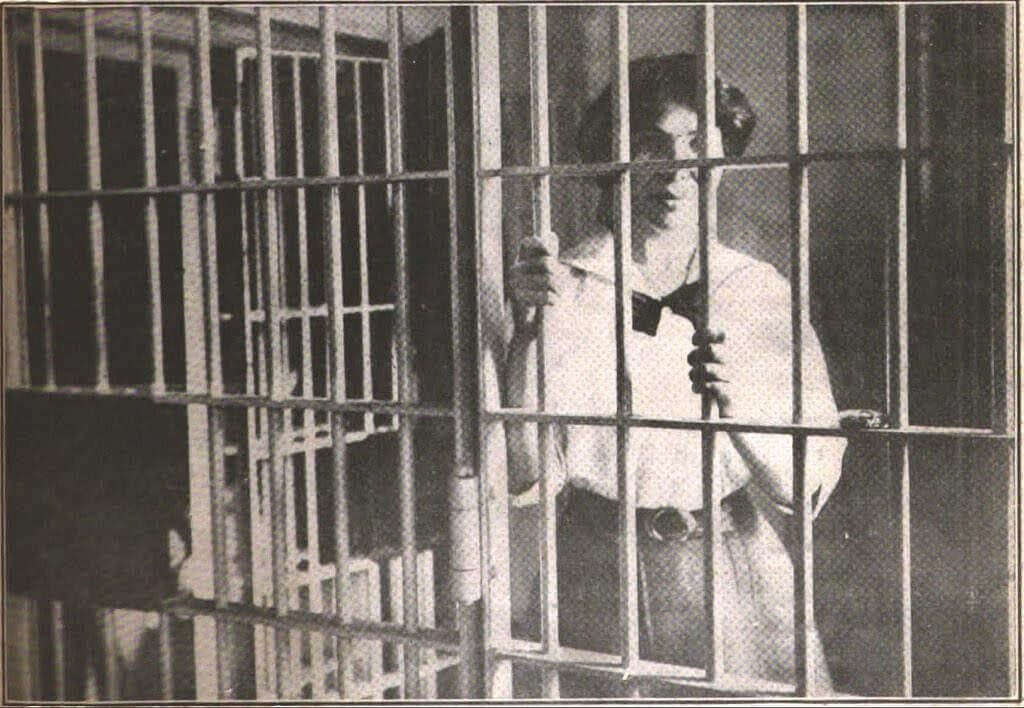
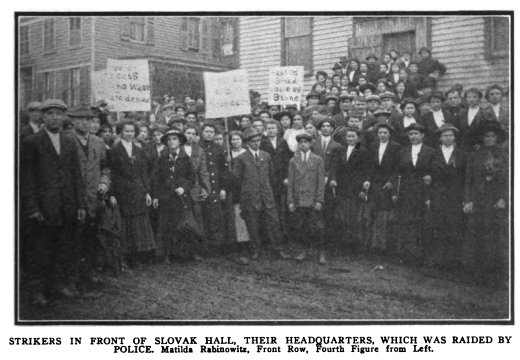
Not long after Schloss became involved and the union was formed, local police and privately-hired strikebreakers raided the strike headquarters on October 30. Anti-union forces ransacked the headquarters and arrested several leaders of the Strike Committee. These arrests left another gap in the strike leadership that needed to be filled. In response, the IWW sent Matilda Rabinowitz to lead the way in Little Falls.
A Ukrainian immigrant, labor organizer, and socialist, Rabinowitz worked tirelessly to ensure that the strike continued. She ensured that the soup kitchen continued operation, took on bookkeeping duties, upheld the picket line, and organized mass calls for support. Rabinowitz also organized various events designed to help keep morale up for the strikers, such as dances at the headquarters and similar events. At a point where the union was in desperate need of guidance, Matilda Rabinowitz ensured that the struggle continued.
Not long after Rabinowitz came to the city, so too did one of the most prominent names not just in the IWW, but in the history of the American labor movement: “Big” Bill Haywood. Haywood came to Little Falls to further aid in the mill workers’ struggle. For example, Haywood and Lunn gave speeches in nearby cites such as Utica to build more support for the strike. Haywood wrote a piece for the International Socialist Review that told of his experience in the city, the plight of the strikers, and how others could help in their fight.
Factors such as Lunn’s initial arrest, the October 30 raid, and figures such as Bill Haywood coming to Little Falls gave the strike nationwide attention. Helen Keller, who considered herself a Socialist at one point in her life, is one of the significant names to support the strike effort. Keller mailed a letter to the strikers with a check for $87 enclosed, displaying her solidarity with their plight. Part of that letter reads;
“Surely the things that the workers demand are not unreasonable. It cannot be unreasonable to ask of society a fair chance for all. It cannot be unreasonable to demand the protection of women and little children and an honest wage for all who give their time and energy to industrial occupations. When indeed shall we learn that we are all related one to the other, that we are all members of one body? Until the spirit of love for our fellowmen, regardless of race, colour or creed, shall fill the world, making real in our lives and our deeds the actuality of human brotherhood -until the great mass of the people shall be filled with the sense of responsibility for each other’s welfare, social justice can never be attained.”
After continuous opposition from the media, the mill owners, the police, and even the American Federation of Labor, who tried to illegitimately settle the strike, steps towards a settlement were made when the State Board of Mediation and Arbitration officially intervened in the matter. Board representatives interviewed strikers who told them of poor wages and the abuses that they faced from police and strikebreakers. On January 3, the strikers won a settlement. Their demands, which include being paid the wage they made prior to the reduction of hours, were met, and the strike officially ended on January 6.
That the Little Falls Textile Strike has, with some exceptions such as a dramatization of the strike and a handful of short articles, been forgotten in the grand scheme of labor and socialist history in the United States does the workers and organizers who engaged in this struggle a huge disservice. The strike in Little Falls provides major historical lessons on the shortcomings of labor legislation under capitalism and the continued need for solidarity in these struggles, just as the Bread and Roses and Paterson strikes do, and it deserves historical appreciation on a wider scale.