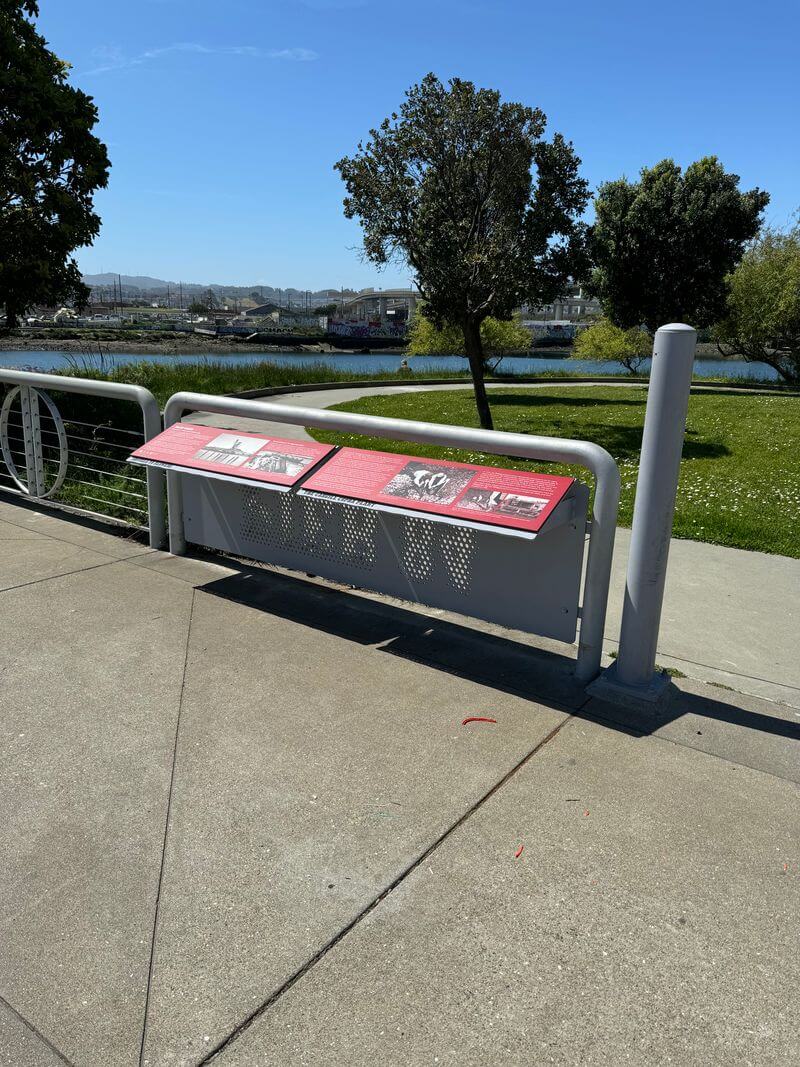
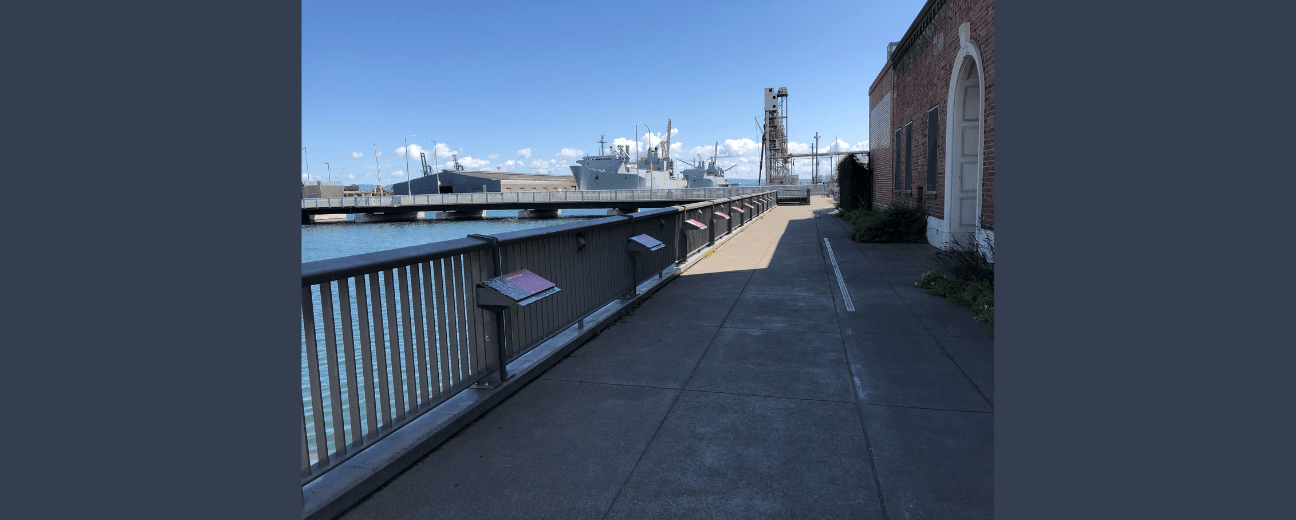
Professional historians often talk about the need for public education and public history. A year and a half ago, San Franciscans completed one such project: an extensive signage park on the waterfront south of the city’s landmark Ferry Building that highlights the history of the region’s workers and profiles its Indigenous residents and natural history. This ambitious project took nearly 30 years to finalize with adjustments and changes along the way. I was part of the project.
The project’s story is in part a warning that big projects in public history can take a long time to complete and in part encouragement that success is possible.
In 1996, I attended a planning meeting at the Local 10 hall of the International Longshore and Warehouse Union, located at San Francisco’s north waterfront near the city’s famous Fisherman’s Wharf. Bill Ward and Don Watson, ILWU old-timers, were at the meeting. Cleophas Williams, a four-time president of Local 10, probably attended, as did Archie Green, a former union shipwright turned English professor, folklorist, and creator of a scholarly concept called “labor lore.” Julia Viera, who had local political connections, was there. Robin Chiang, a highly regarded city architect, was probably in the room. I was much younger than everyone but Robin. I’d published one book on the ILWU and had worked as a stringer on The Dispatcher, the union’s newspaper, for a couple of years.
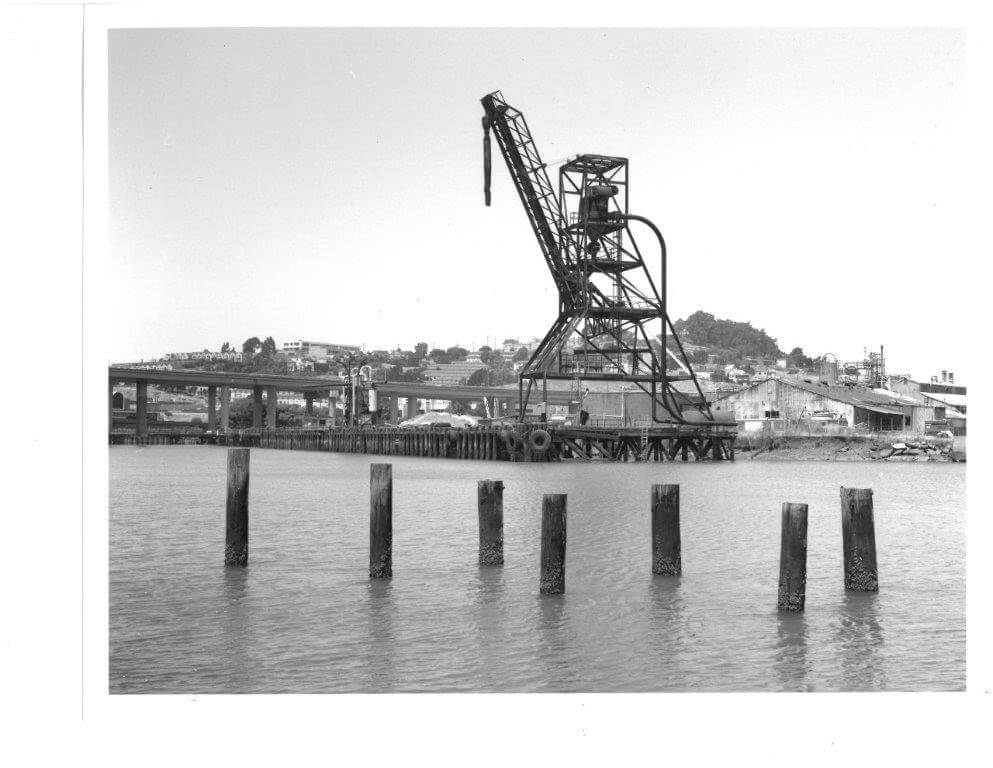
By this time, San Francisco’s historic working waterfront had all but vanished. Following the container revolution of the 1960s-1980s, most local longshore cargo handling had mechanized and moved across San Francisco Bay to the Oakland waterfront, where there was more room for vast container stations. Archie Green and Julia Viera, though, championed the idea of saving an outmoded, five-story-tall copra (dried coconut) crane on San Francisco’s south waterfront. They envisioned the copra crane, located four-and-a-half miles from Local 10’s hall, as a labor landmark and a monument to the workers who built the city.
In the 1980s, I’d interviewed dozens of ILWU veterans as part of a National Endowment for the Humanities-funded oral history project sponsored by the union and the University of California, Berkeley. At the 1996 meeting, the ILWU old-timers asked me to conduct some new interviews for an organization they had just established called the Copra Crane Labor Landmark Association (CCLLA). They really wanted this. How could I refuse? I became a member of the CCLLA.
Over the next few years, I interviewed several ILWU veterans who had worked in the 1940s to 1970s on what was known as “the copra dock” at Pier 84. Using picks and shovels, longshoremen had loosened incoming caked copra in ships’ holds—hard and demanding work. Joe Aymes, an old copra man, remembered, “You worked twenty minutes with a pick, twenty minutes with a shovel, and you had twenty minutes off.” He also recalled that newly arrived copra contained irritating beetles the longshoremen called “copra bugs” and that rotted copra at the bottom of the vessel “smelled like hell.” His pithy description of the work now appears on one of the display panels on the sight.
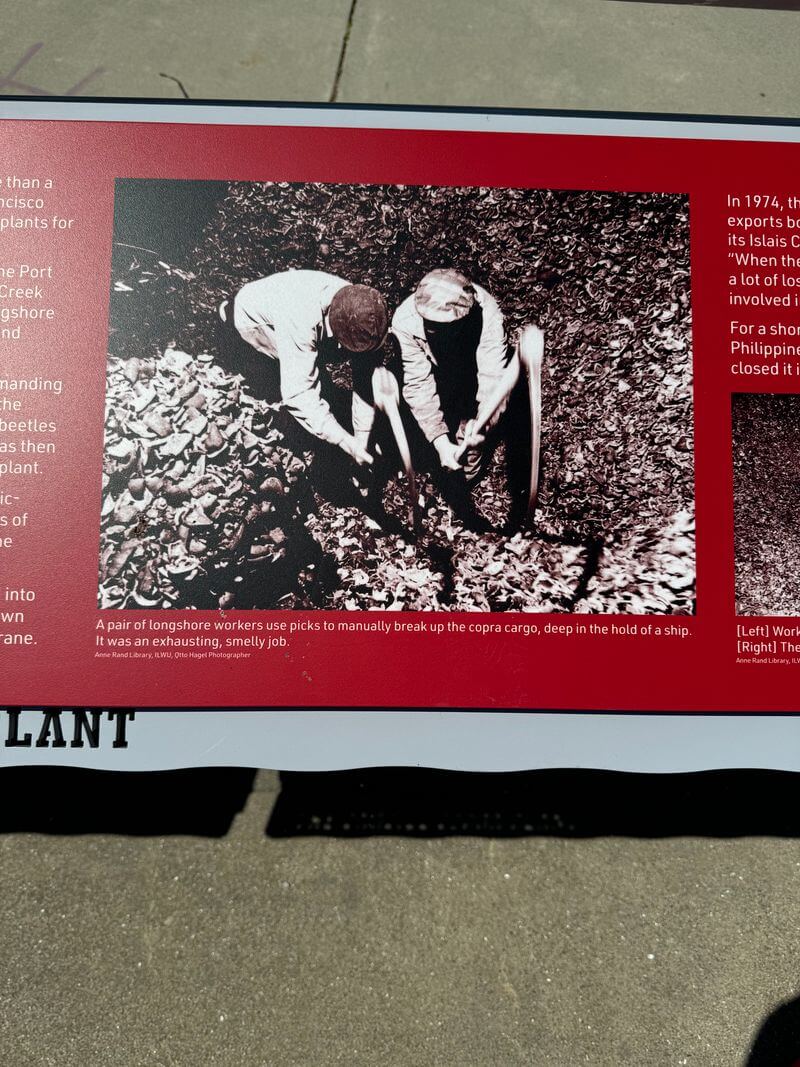
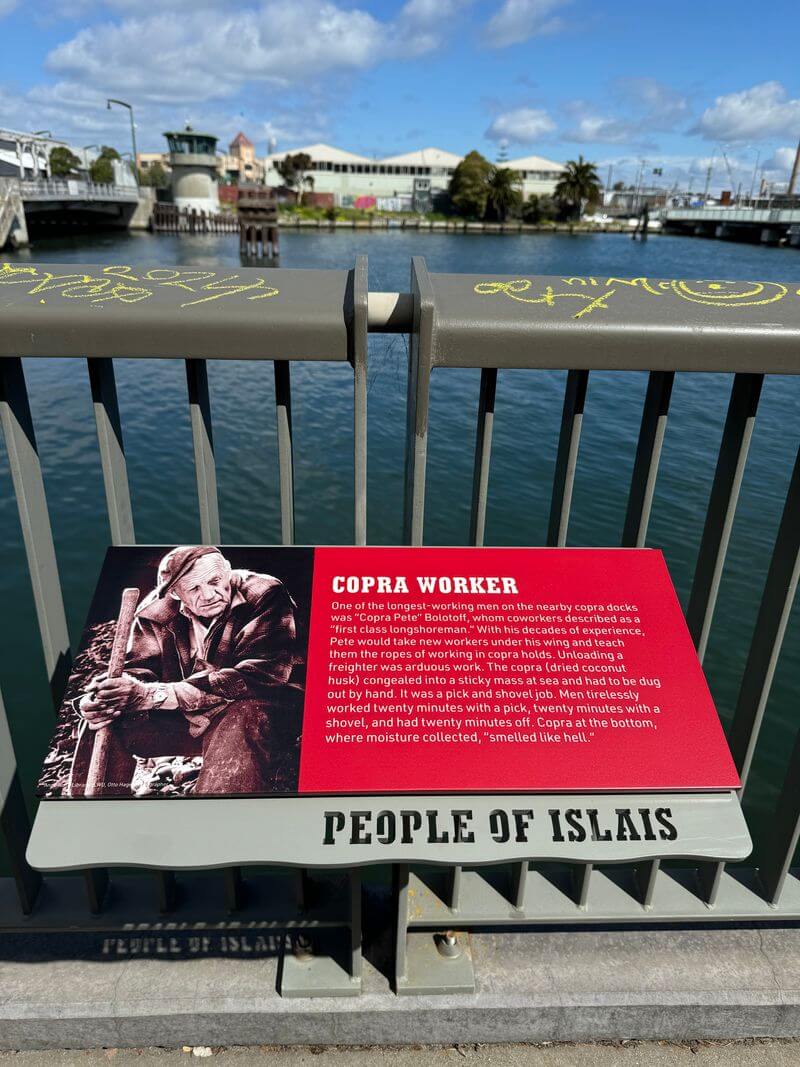
The loose copra was then removed from the ships by specialized suckers and deposited into an adjacent warehouse that employed ILWU Local 6 warehouse people. There it was processed into different products, including oil used in toilet, laundry, and marine soap; shaving cream; shampoo; cosmetics; medicine; and various foods, such as ice cream, baked goods, candy bars, and even theater popcorn “butter.” The copra crane moved a major post-processing copra byproduct, animal feed, into the holds of outbound ships. We used my interviews in different ways to raise awareness of the movement to save the copra crane. Jo Kreiter, founder of the modern dance group Flyaway Productions, had the interviews set to music. She and her performers danced on the crane in 2000 as part of a big community event. In 2008, I published an article about the crane in a scholarly periodical, Labor Studies Journal (33: 203-212).
The CCLLA was initially promoted by the ILWU. Bill Ward, who had been an ILWU officer, served as president. Don Watson, a long-time ILWU Ship Clerks Local 34 activist, volunteered to be the secretary-treasurer. Archie Green contributed in numerous ways, including writing for the CCLLA and offering new ideas. Julia Viera and Robin Chiang, who lived near the crane in San Francisco’s Bay View District, helped greatly as well. Cleophas Williams often attended the early CCLLA meetings.
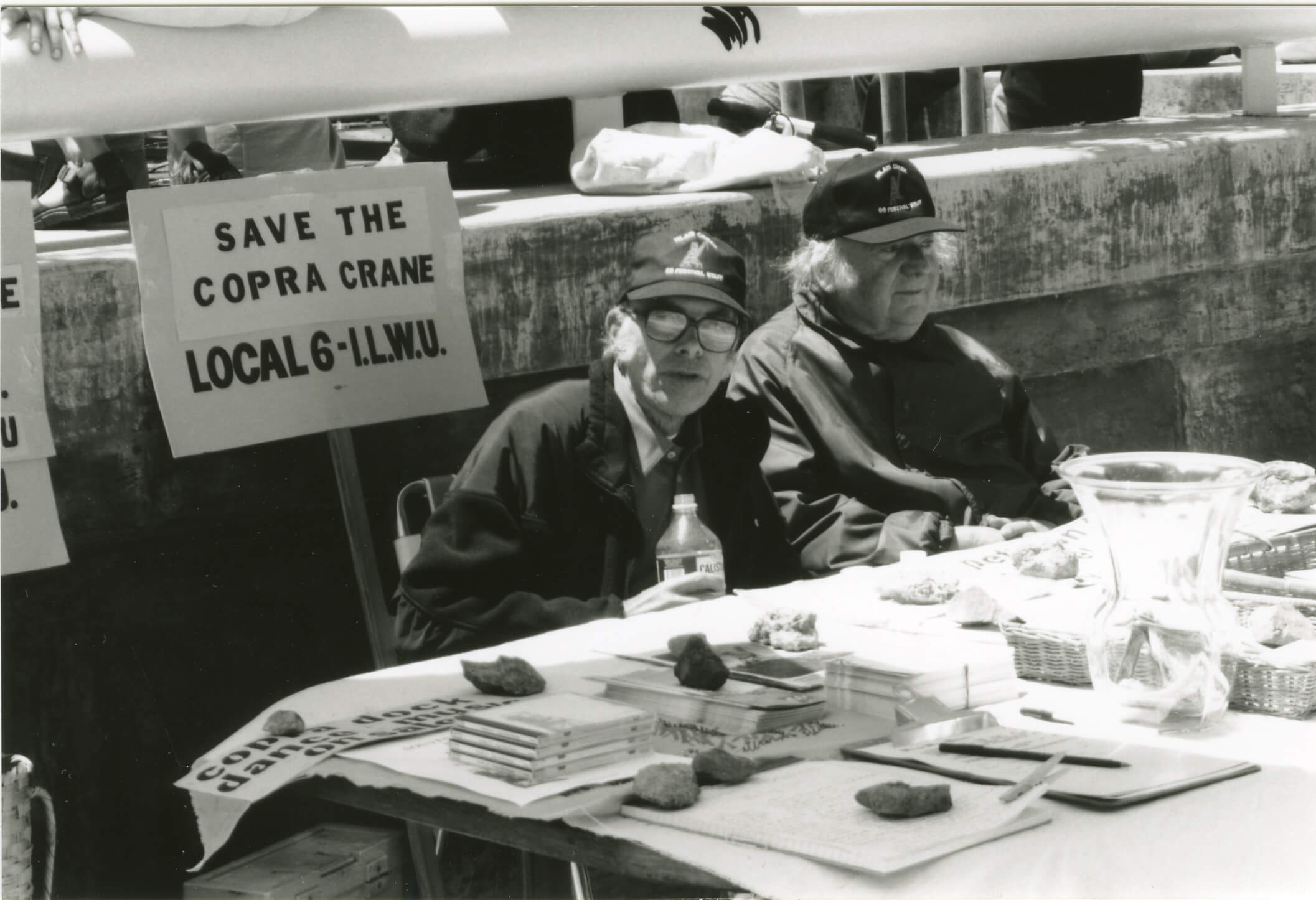
Before long, the CCLLA contacted the Port of San Francisco for support. Funds were raised to safeguard and preserve the crane. David Beaupre, a Port of San Francisco waterfront planner, sponsored the crane preservation effort for years. The CCLLA also reached out to other unions. By 2003, the list of CCLLA supporters included representatives from more than twenty local labor organizations. Pat Karinen from Local 34 of the Pile Drivers Union was especially active. Some CCLLA meetings were even held at carpenter and ironworker union halls.
As time went by, though, the port, which took charge of the crane, was unable to refurbish the big structure. It weighed fifty-four tons and had a conveyor boom of 16,000 pounds. It needed sandblasting and painting. There were safety concerns and insurance requirements. After about 20 years, most of the early CCLLA members had retired or died. Bill Ward and Don Watson passed away. Archie Green died in 2009. Finally, only two long-serving CCLLA people remained: me and Archie Green’s son, Derek, a retired business agent from Local 6 of the International Brotherhood of Electrical Workers. Together we approached ILWU International Secretary-Treasurer Willie Adams for help. Happily, Adams was also a Port of San Francisco commissioner and served as the commission’s president.
Adams arranged for Derek and me to meet with Elaine Forbes, the executive director of the Port of San Francisco. Adams attended the meeting. His efforts were key to the finalization of the waterfront project. Forbes explained that there were serious problems with the crane. Refurbishing it would be expensive. The port could refurbish the crane, but the question of maintenance and insurance would remain. Derek and I would have to handle that. The CCLLA had helped the port win some grant money, and the ILWU had voted to donate some funds to the cause, but there was a huge gap. Derek and I, the last of the CCLLA’s active adherents, would have to raise money for yearly maintenance and insurance. This would cost thousands that Derek and I could never collect. Forbes, though, had an alternative plan.
She offered to have the port build an interpretive signage park along Islais Creek, where Pier 84 and the crane had existed. The crane, which now presented safety hazards, would have to go. The park’s signs would prominently feature the history of the region’s various groups of workers. It would also profile the area’s original Indigenous inhabitants and the creek’s natural history. Adams asked Derek and me what we thought. We said, “We have to take the offer.” It seemed the only reasonable option available.
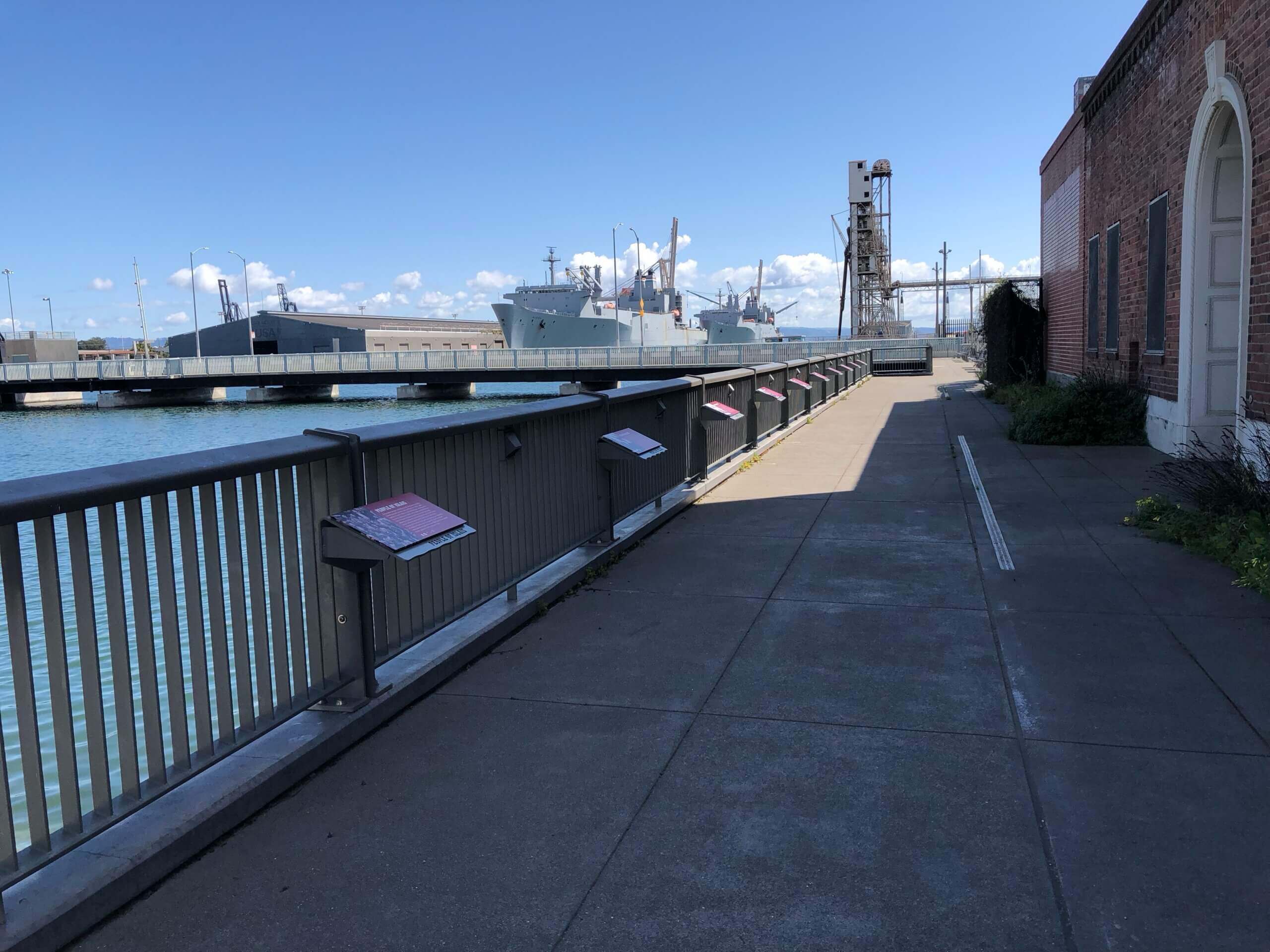
Even then it took another seven years for the port to bring the signage park to completion. Derek and I supplied the port’s designers and planners with graphics and historical information. In the end, the park installed twenty-seven state-of-the-art, weather-resistant signs at three locations along Islais Creek.
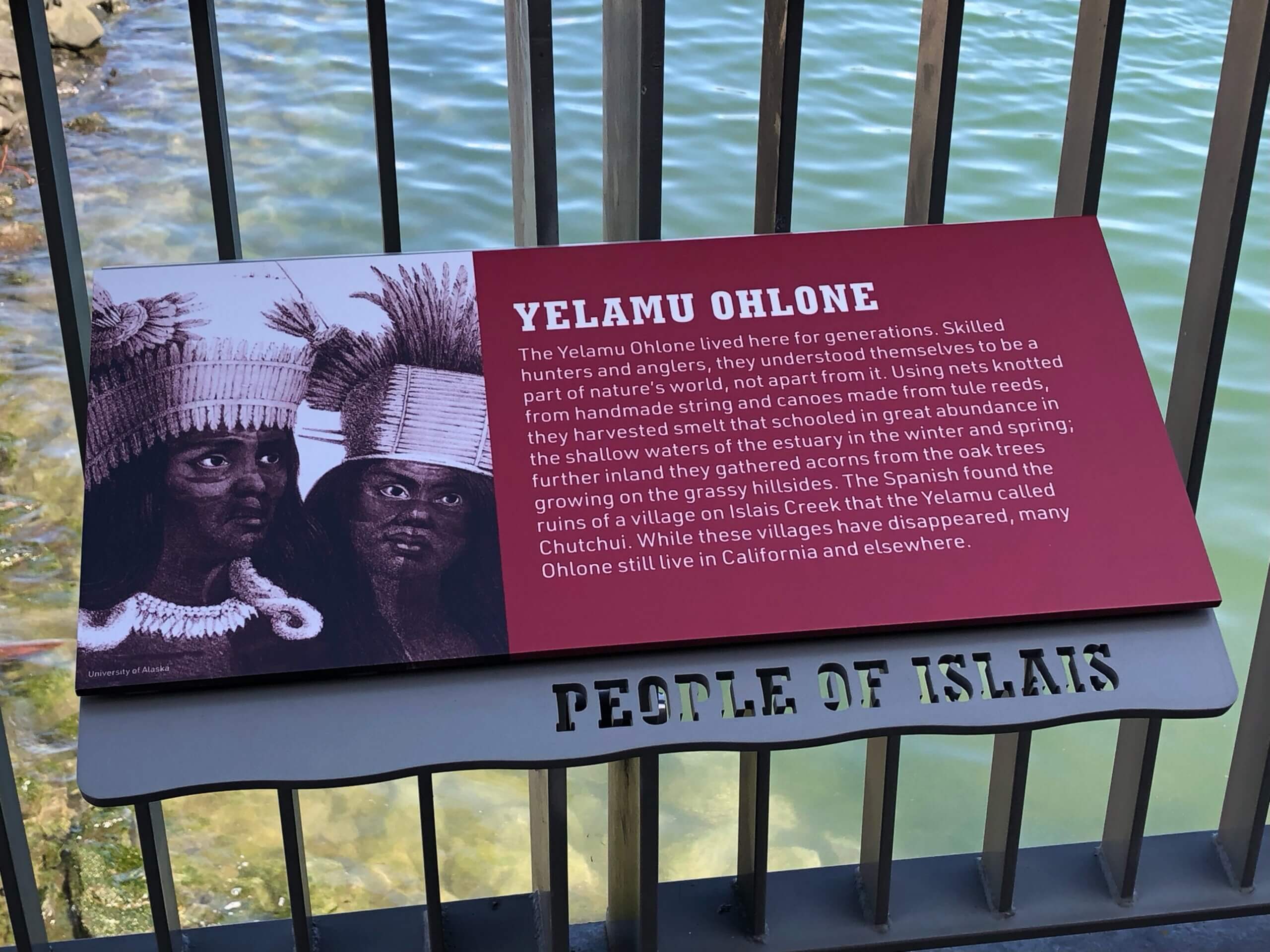
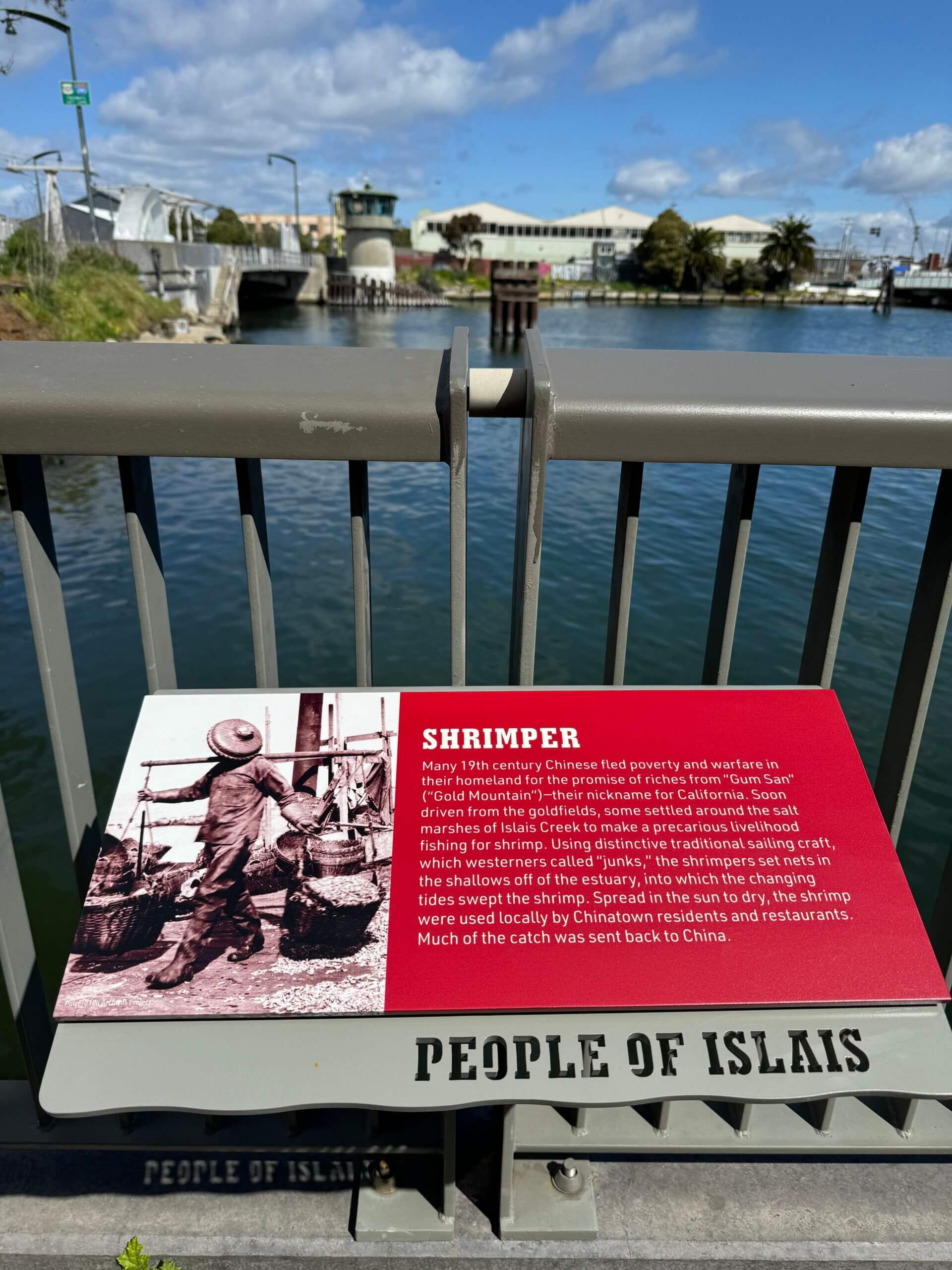
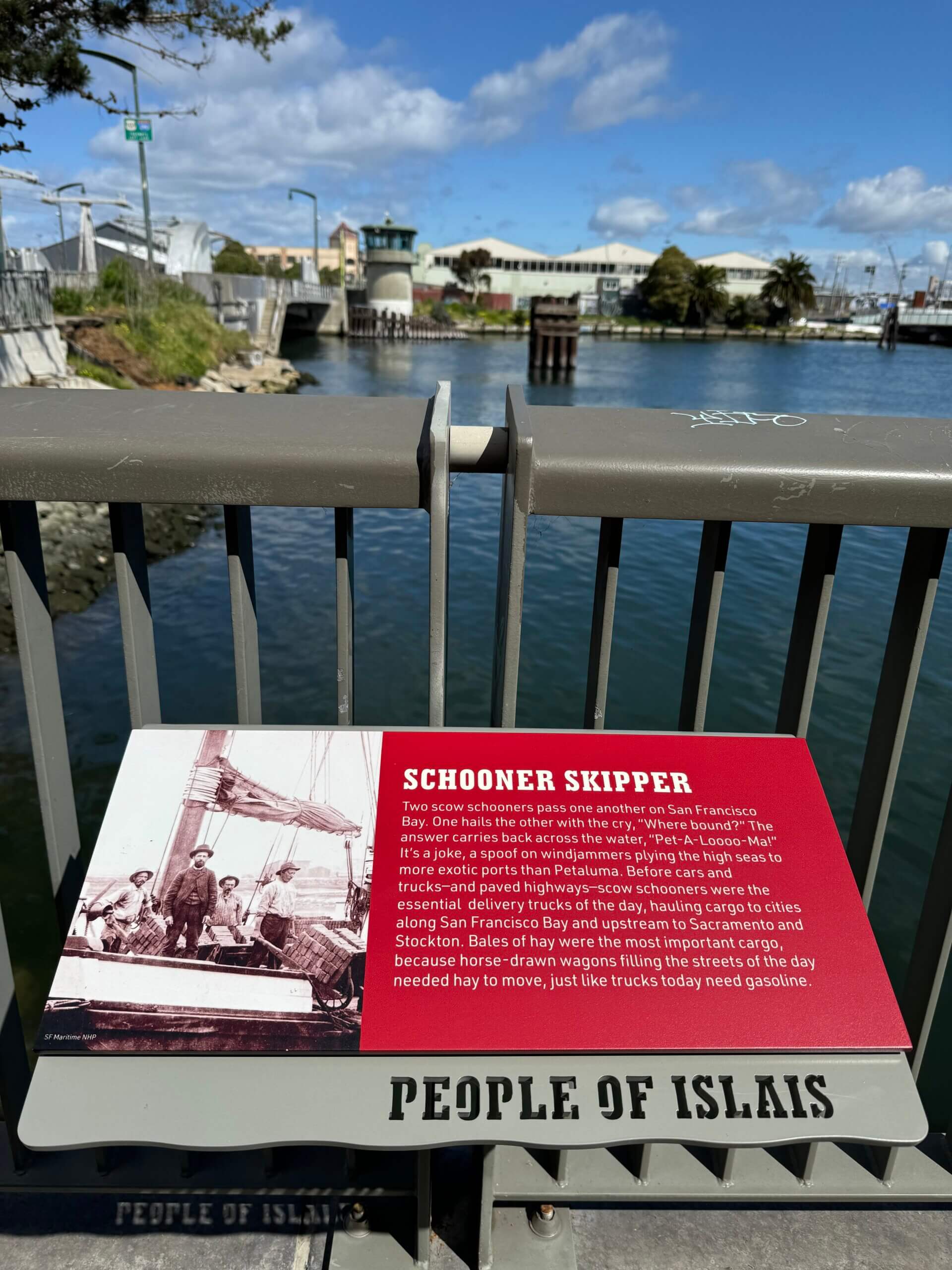
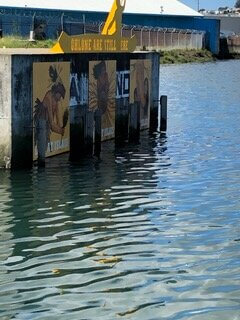
Of the twenty-seven signs, three are introductory plaques that describe the area’s plants and animals, the resident Yelamu Ohlone, and cargo handling and maritime industry. Several different panels highlight copra workers, the copra crane, the nearby copra processing plant—which no longer exists—and traditional longshore operations. Other plaques trace the development of waterfront industry, water treatment, and the historic seawall located where Islais Creek meets San Francisco Bay. One highlights the Yelamu Ohlone presence. Various panels describe diverse workers who have labored along Islais Creek since the late nineteenth century, including Mexican-era vaqueros, European immigrants, schooner sailors, Chinese shrimpers, butchers, produce market employees, and transportation workers. In addition to the state-of-the art plaques, there are four Yelamu Ohlone art pieces attached to a large concrete structure in Islais Creek and three special signs that warn around the dangers of climate change.
This public history project took a long time—twenty-eight years, to be exact—to come to a successful finish. An impressive public ceremony marked the opening of the park in 2024. By then, Willie Adams, who had become ILWU International president in 2018, was retiring. Elaine Forbes, a long-time San Franciscan and public policy contributor, retired as executive director of the port the next year. David Beaupre, who had backed CCLLA for years from his post inside the port structure, was a deputy port director. But the final project, with its numerous history panels, is quite stunning. Sometimes, it seems, perseverance can ultimately win out.
——————————
For more panel pictures, see the Port of San Francisco’s website, https://www.sfport.com/node/6533